Bosnia & Herzegovina
Europe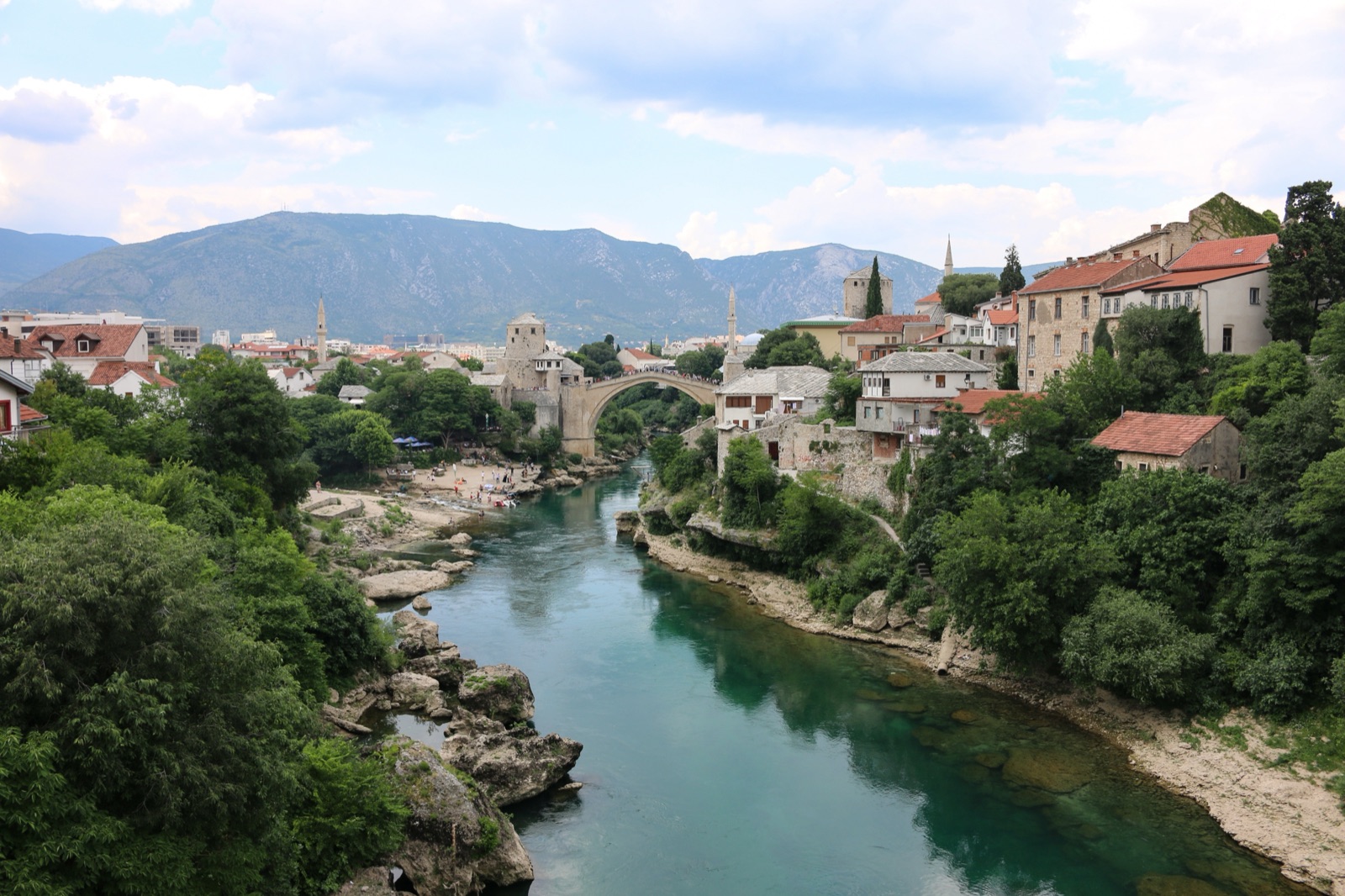
The Dinaric Alps run through Bosnia and Herzegovina in a rugged landscape of limestone ridges, deep forested valleys, and dramatic river gorges, with peaks rising above 2,000 meters. Towns, roads, and rivers are often squeezed into narrow valleys, and the mountains historically made travel between valleys difficult, helping communities maintain distinct local traditions and identities.
Rivers cut deep valleys and gorges through Bosnia and Herzegovina's mountains. The Neretva, famous for its vivid emerald-turquoise water, flows south through Mostar toward the Adriatic Sea, while the Sava forms much of the country's northern border with Croatia. River valleys have long provided routes through the country's otherwise rugged terrain.
Southern and western Bosnia and Herzegovina contain karst landscapes filled with sinkholes, caves, disappearing rivers, and underground channels. Rainwater slowly dissolves the limestone, so rivers can vanish underground and emerge kilometers away from caves or powerful springs.
Bosnia and Herzegovina is almost completely enclosed by land, but a tiny Adriatic coastline around Neum gives it access to the sea. Croatia lies on both sides of this narrow corridor, separating the Dubrovnik region from the rest of Croatia's mainland coast; Croatia opened the Peljesåc Bridge in 2022 to connect the two without crossing through Bosnia and Herzegovina.
- Near Blagaj, the Buna River bursts from a cave at the base of a cliff about 200 meters high. It is one of Europe's largest karst springs, and at peak flow enormous amounts of water pour from underground limestone channels into the river.
- One of Europe's few remaining old-growth forests survives in Sutjeska National Park in Bosnia and Herzegovina. Called Perucica, parts of the forest have never been logged, some trees are more than 300 years old and around 50 meters tall, and the forest has remained continuous since the last Ice Age.
Bosnia and Herzegovina is one country whose name comes from two historic regions. Bosnia covers most of the north and center, while Herzegovina generally refers to the warmer south around Mostar and the Neretva River. The two are historic and geographic regions, not separate political divisions, and there is no official boundary between them.
Most people in Bosnia and Herzegovina identify with one of three large national communities—Bosniaks, Serbs, or Croats—known in the country's constitution as the three "constituent peoples." Bosniak identity has historically been associated mainly with Islam, Serb identity with Orthodox Christianity, and Croat identity with Catholic Christianity, although individual beliefs vary. Bosniak, Serb, and Croat communities have lived alongside one another across this region for generations, often in the same towns and cities.
Bosnian, Serbian, and Croatian are so closely related that speakers can usually understand one another. Over time, different national histories and identities led people to standardize and name them separately as Bosnian, Serbian, and Croatian. Bosnian and Croatian are usually written with the Latin alphabet, while Serbian uses both Cyrillic and Latin.
Sarajevo has mosques, Orthodox and Catholic churches, and synagogues built by religious communities that have lived in the city for centuries. Under Ottoman rule beginning in the 1400s, Sarajevo grew into an important Muslim center while Orthodox and Catholic Christian communities also lived and worshipped there. Sephardic Jews expelled from Spain in 1492 later settled in the city, and many brought Ladino, a language based largely on the Spanish their ancestors had spoken.
- In 1914, Archduke Franz Ferdinand, heir to the Austro-Hungarian throne, was assassinated in Sarajevo. His killing triggered a diplomatic crisis that helped lead Europe into World War I.
- Thousands of large carved stone tombstones from the Middle Ages still stand across Bosnia and Herzegovina and nearby countries. Called stećci, many are decorated with geometric patterns, people, animals, and inscriptions.
Bosnia and Herzegovina was once part of Yugoslavia, a larger country in southeastern Europe that broke apart in the early 1990s. After Bosnia and Herzegovina declared independence in 1992, Bosnian Serb, Bosniak, and Bosnian Croat forces fought over territory and political control until 1995. The war killed and displaced civilians on a massive scale, and Bosnian Serb forces committed genocide against Bosniak civilians at Srebrenica. The Dayton Peace Agreement ended the war in 1995 and created a complex power-sharing government designed to prevent any one national community from controlling the country.
One example of Bosnia and Herzegovina's unusual power-sharing system is its presidency: instead of one president, three people share the role. One member is Bosniak, one Croat, and one Serb, and the chair rotates among them every eight months. Few countries divide the head-of-state role this way; the arrangement was created after the war to give each of the three constituent peoples a place in national leadership.
Forests cover more than half of Bosnia and Herzegovina, supporting timber and furniture industries, while fast-flowing mountain rivers are used to generate hydroelectric power. Many of the country's metalworking and manufacturing industries also grew while Bosnia and Herzegovina was part of Yugoslavia, and factories from that industrial period still operate today.
War in the 1990s forced many people from Bosnia and Herzegovina to leave the country, while others have moved abroad more recently for jobs and higher wages. These migrations created large Bosnian communities elsewhere in Europe and around the world. Money sent home by people working abroad—called remittances—is an important source of income for many families.
- Mostar's famous stone bridge stood for more than 400 years before it was destroyed during the 1990s war. Stari Most, or "Old Bridge," was later reconstructed using historic plans and traditional building techniques and reopened in 2004.
- Sarajevo hosted the 1984 Winter Olympics while Bosnia and Herzegovina was still part of Yugoslavia—the first Winter Olympics ever held in a socialist country.
Recipes
For the whole familyPalačinke (Bosnian Crepes)
Palačinke are thin pancakes eaten across Bosnia and Herzegovina and much of southeastern and central Europe. Unlike thick American pancakes, they are spread into a very thin layer in the pan and then rolled or folded around fillings such as jam, chocolate-hazelnut spread, ground walnuts, or sugar. They are an everyday sweet rather than a food unique to Bosnia and Herzegovina, but they are familiar in Bosnian homes and cafés.
What it is: Thin, crepe-like pancakes rolled or folded around a sweet filling.
Difficulty: Easy; an adult should help younger children with the hot pan.
Mini Ćevapi
Ćevapi are small, skinless grilled sausages and one of the foods most closely associated with Bosnia and Herzegovina. Different cities have their own traditions, with Sarajevo and Banja Luka especially famous for theirs. Ćevapi are commonly tucked into soft flatbread called somun or lepinja and served with chopped onion, and ćevabdžinice specializing in the dish are a familiar part of food culture in Bosnian cities.
What it is: Small grilled or pan-cooked sausages made from seasoned ground meat and usually served with flatbread and onion.
Difficulty: Easy to moderate; children can help mix and shape them while an adult handles the hot pan or grill.
Traditional Games
All agesTry a traditional five-stones game that challenges players to toss, pick up, and catch pieces in increasingly difficult combinations.
Try a safe version of a traditional striking game documented in Bosnia and Herzegovina.
Activities
Build Bosnia and Herzegovina's Mountains and Rivers
Build a simple landscape model to see how mountains, river valleys, and one tiny stretch of Adriatic coast shape the country.
Build Hedgehog a Forest Home
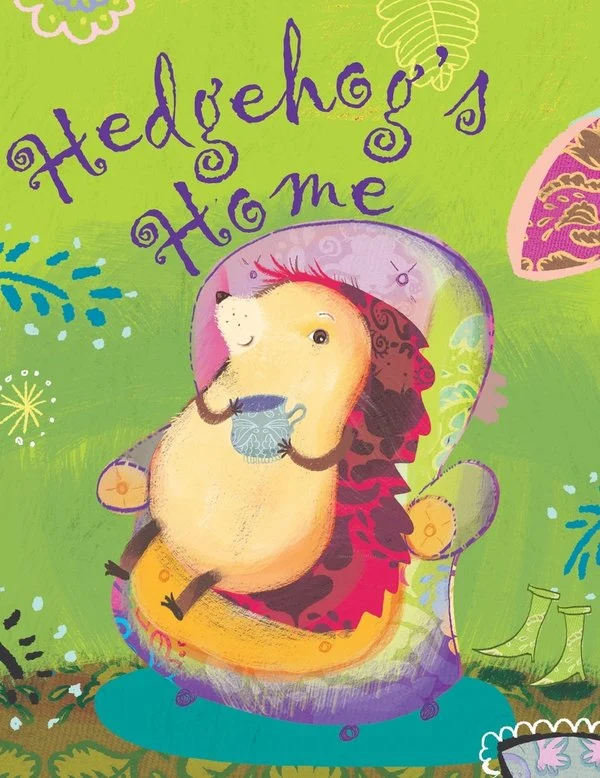
Meet animals of Bosnia and Herzegovina's forests, then build a snug woodland home for the hedgehog in Hedgehog's Home.
Listen to a Sarajevo Ladino Song
Hear a song from the Sephardic Jewish tradition that families carried from Spain to Sarajevo and kept alive for generations.
Build a Bridge
Engineer a bridge strong enough to hold real weight — then test how many pennies it can carry
Make a Working Waterwheel
Build a waterwheel that spins under running water — and discover how Bosnia's mountain rivers powered mills for centuries
Bosnia's Waterfalls, Rivers, and Mountains: Photo Exploration
See why Bosnia is called "the Switzerland of the Balkans" — turquoise rivers, forested mountains, and cascading waterfalls
Bosnia and Herzegovina: One Country, Two Historic Regions
Map the country's mountains, rivers, cities, and coast while discovering why its name contains both Bosnia and Herzegovina.
Build Stari Most
Build and test a model arch after examining Mostar's famous bridge over the Neretva River.
Read a Medieval Stećak Like an Artifact
Examine Bosnia and Herzegovina's carved medieval tombstones, compare recurring motifs, and decide what the stone itself can—and cannot—tell us.
Why Did Sarajevo Host the Winter Olympics?
Match Winter Olympic sports to Sarajevo's surrounding mountains and discover why the city hosted the world in 1984.
Explore Sarajevo's Layers of Faith and Architecture
Explore a mosque, Catholic cathedral, Orthodox cathedral, and synagogue to see how several communities became part of Sarajevo's story.
Make a Zmijanje-Inspired Pattern
Study the deep-blue geometric embroidery of Zmijanje and create a paper pattern based on real examples.
Sarajevo: One City, Many Historical Layers
Walk through Sarajevo virtually and identify how Ottoman, Austro-Hungarian, Yugoslav, and modern Bosnia and Herzegovina occupy the same city.
Follow the Journey of the Sarajevo Haggadah
Trace how an illuminated Jewish manuscript traveled from medieval Spain to Sarajevo and became one of the city's treasures.
Listen to Sevdalinka
Hear Bosnia and Herzegovina's urban folk-song tradition and listen for how singers turn love, longing, memory, and place into music.
How Sarajevo's Geography Shaped the Siege
Use valley-and-mountain geography to see how surrounding high ground, exposed routes, and the airport affected civilian life during the 1992–1995 siege.
Map a Refugee Journey
Trace one family's movement out of Bosnia and Herzegovina and see how borders, roads, and neighboring countries become part of a refugee story.
The Dayton Agreement: How Bosnia Was Divided on a Map
The 1995 peace deal ended the war — by drawing borders inside a country that still exists.
From Yugoslavia to Bosnia and Herzegovina
Use maps and a short timeline to understand how one Yugoslav republic became an independent country and why war followed.
Why Winter Smog Gets Trapped in Sarajevo
Use Sarajevo's basin geography and pollution sources to explain why winter air can become hazardous and compare possible solutions.
Investigate Srebrenica
Examine maps, carefully selected testimony, and memorial records to understand what happened at Srebrenica and why it is recognized as genocide.
How Dayton Changed the Map
Read the postwar map and discover why Bosnia and Herzegovina's government is unusually complex today.
Bosnia's Rivers: Hydropower and River Protection
Compare the value of hydroelectric power with concerns about how dams and small hydropower projects can change rivers and nearby communities.
Dayton's Dilemma: Did the Peace Deal Make Good Governance Impossible?
Bosnia has 13 prime ministers, 14 parliaments, and 147 ministers — for 3.3 million people.
Picture Books
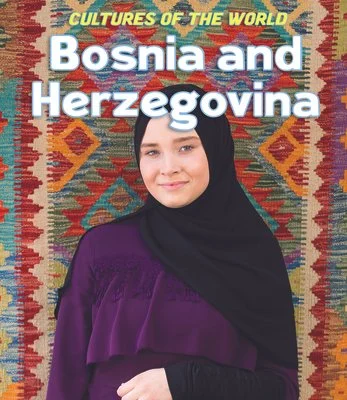
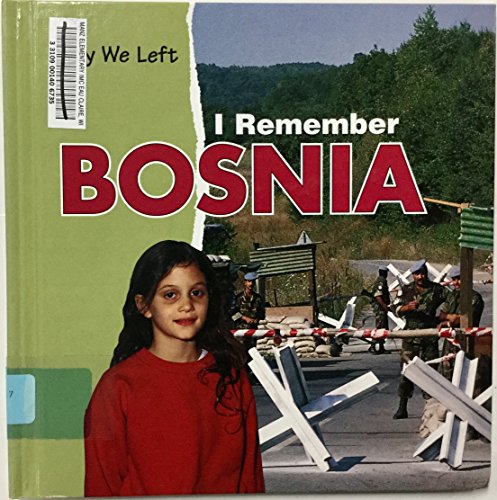
Recommended for grades K–4 and family read-alouds. Short, illustrated books suited to independent or shared reading; some explore subjects that older students can study more deeply.
Middle Grade
Grade 9 / Advanced
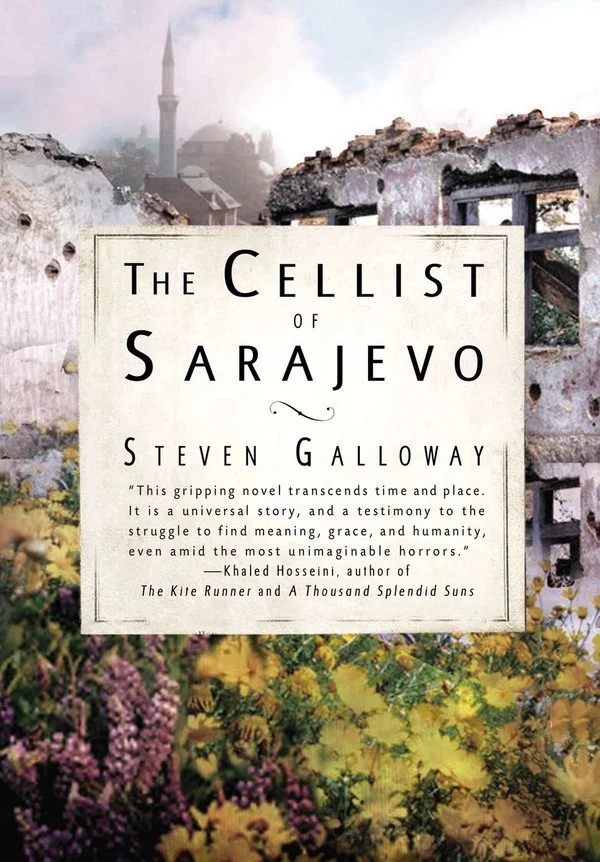
Recommended for grades 8–9 and up. More demanding in length, language, structure, subject matter, or required background knowledge.
Reference Books
A note for parents
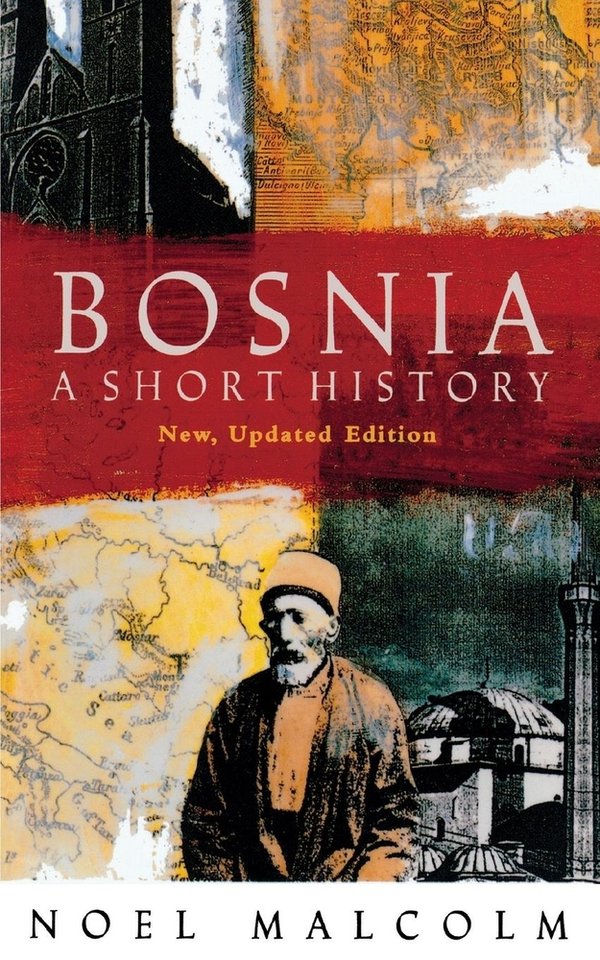
Grade recommendations are based on reading level, complexity, and intended audience. Because every student and family is different, please review the book descriptions and content notes, and preview titles as needed, to determine whether each selection is a good fit for your student and your family's values. Content notes identify potentially sensitive material but may not cover every concern.