Curriculum Guides
Wondering where to start? Explore five flexible pathways for using the curriculum, with simple guides to help you choose an approach that fits your family or co-op and get the most out of Global Book Passport.
Curriculum Guides
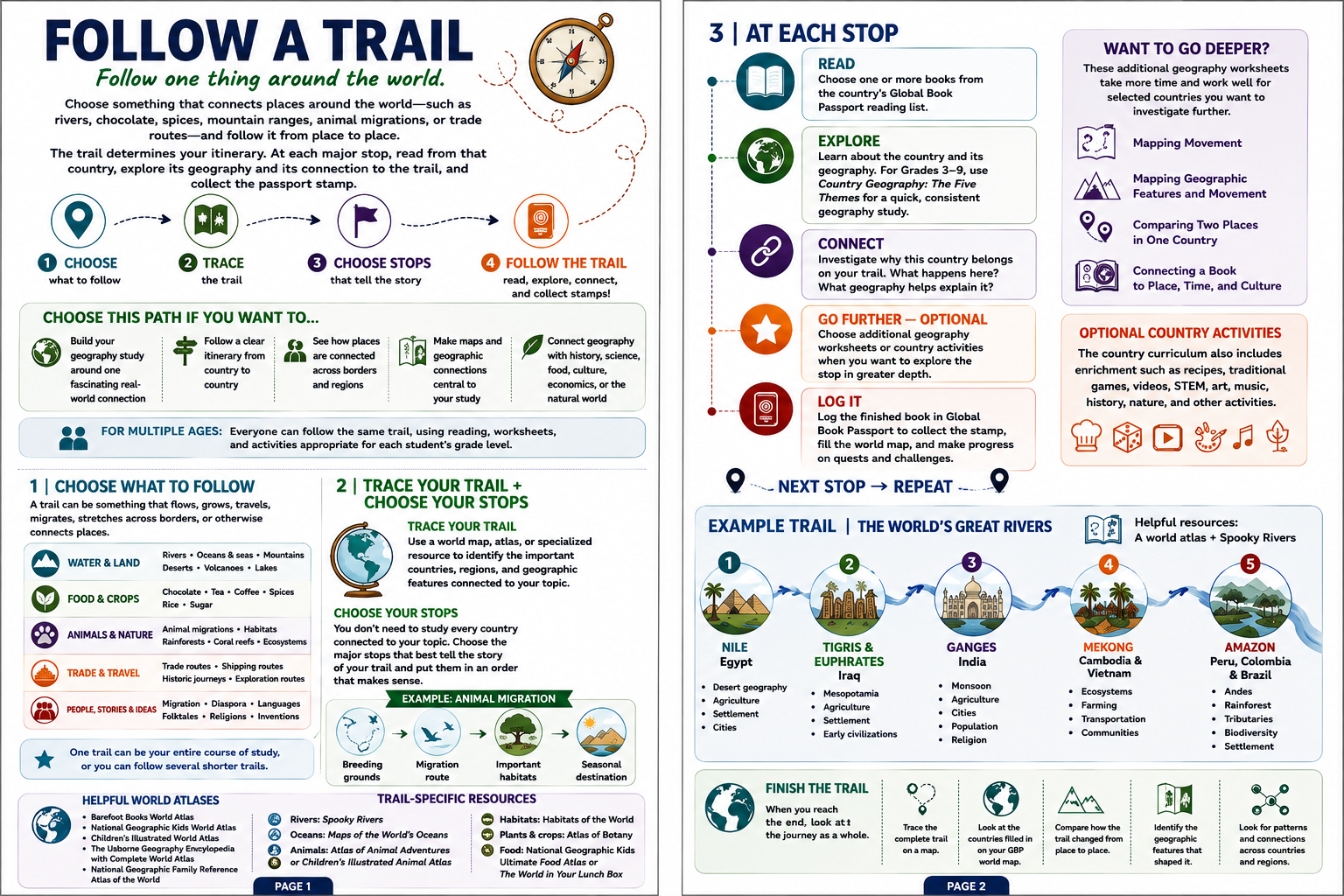
Follow a Trail
Follow one connection around the world. Choose a trail such as rivers, foods, animals, mountain ranges, migration, or trade routes, then follow it from country to country through books, geography, maps, and activities.
Great for: Flexible breadth or depth — follow a major trail across many countries or explore a shorter trail in greater depth.
Open guide ↗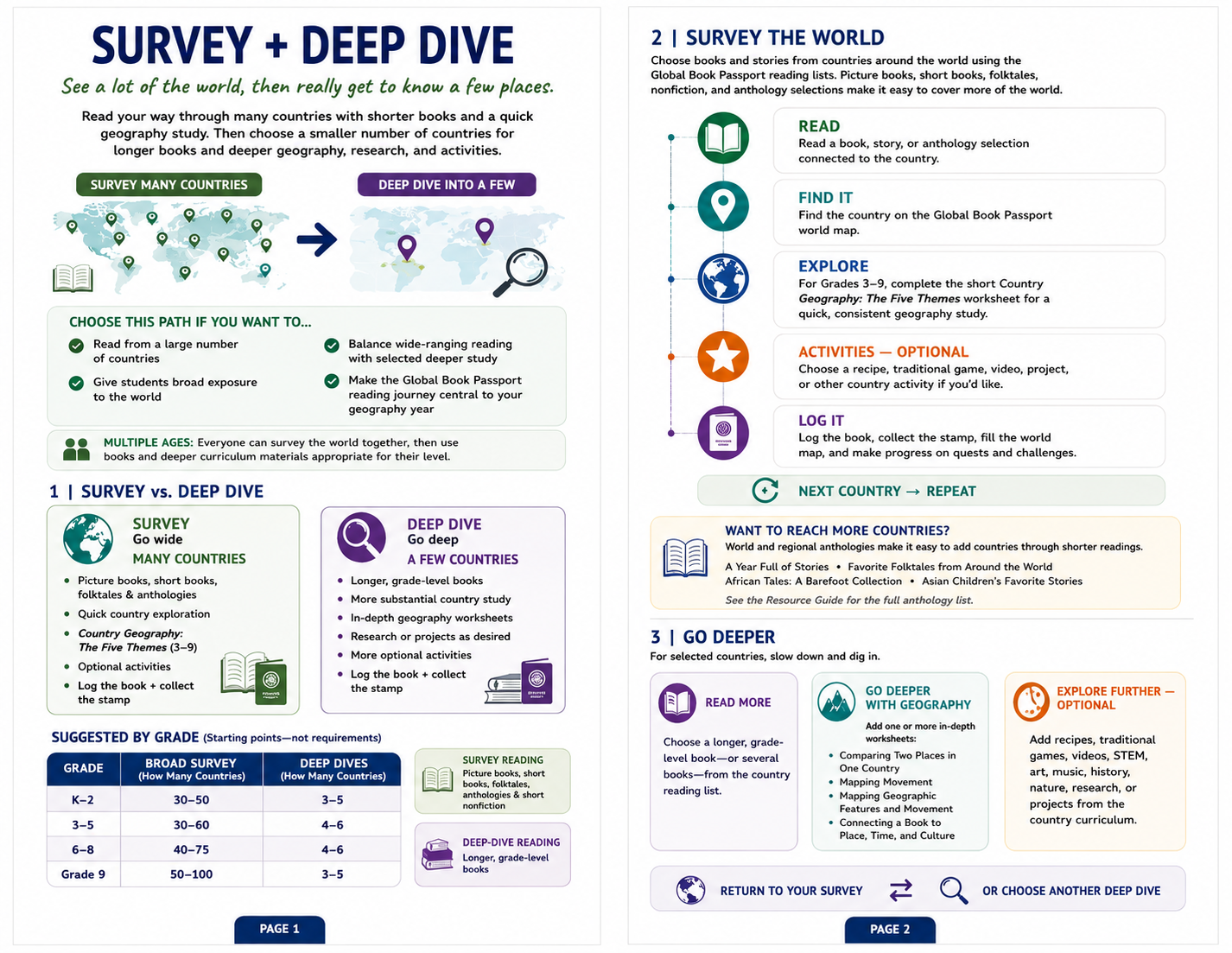
Survey + Deep Dive
See a lot of the world, then really get to know a few places. Read from many countries with shorter books and quick geography studies, then choose a smaller number for longer books, deeper geography work, and activities.
Great for: Maximum breadth while still making room for a few substantial country studies.
Open guide ↗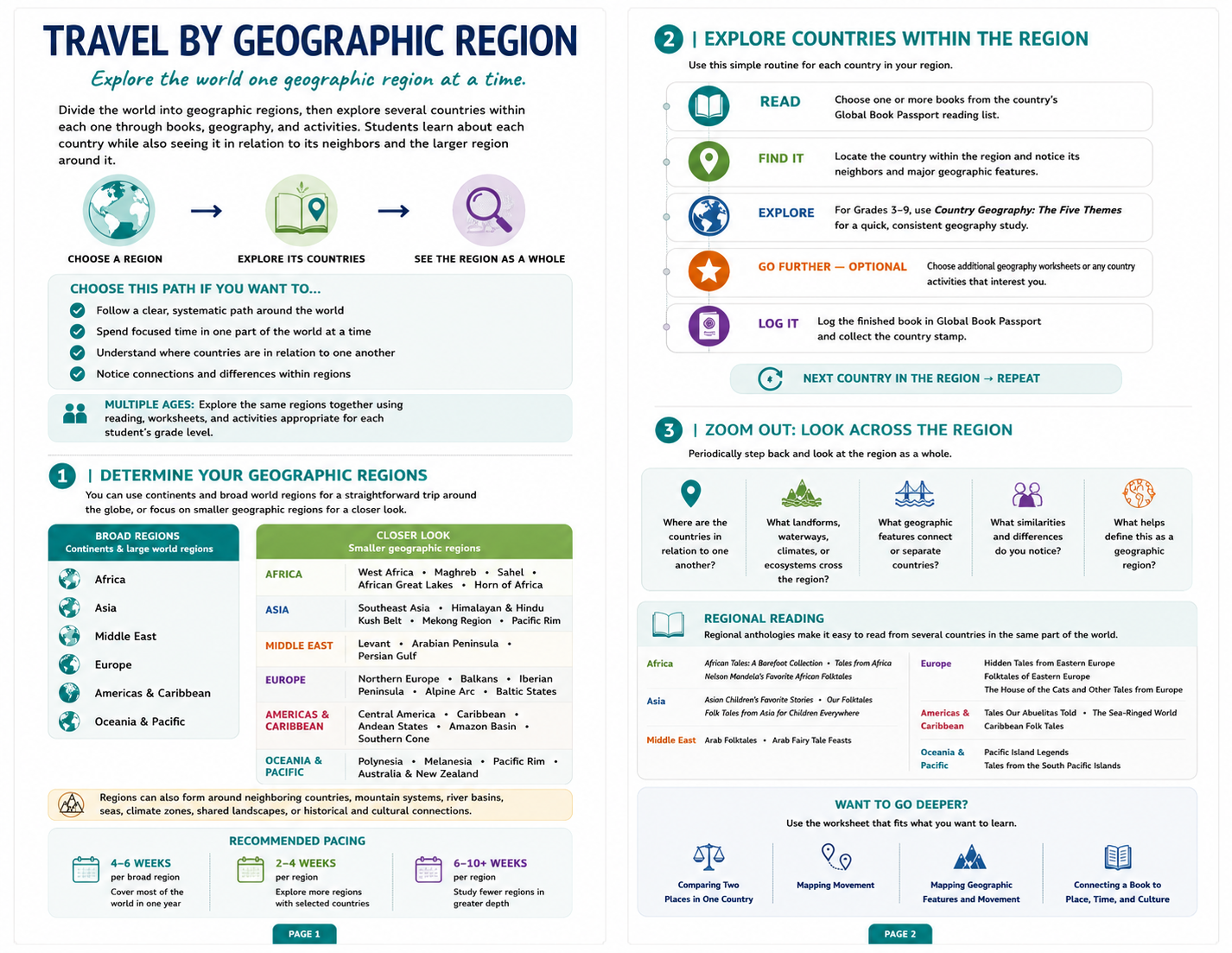
Travel by Region
Explore the world one geographic region at a time. Read and study several countries within each region, discovering where they are, how they connect, and the similarities and differences between neighboring places.
Great for: Balanced breadth and depth, with a clear geographic structure and more context for how countries fit together.
Open guide ↗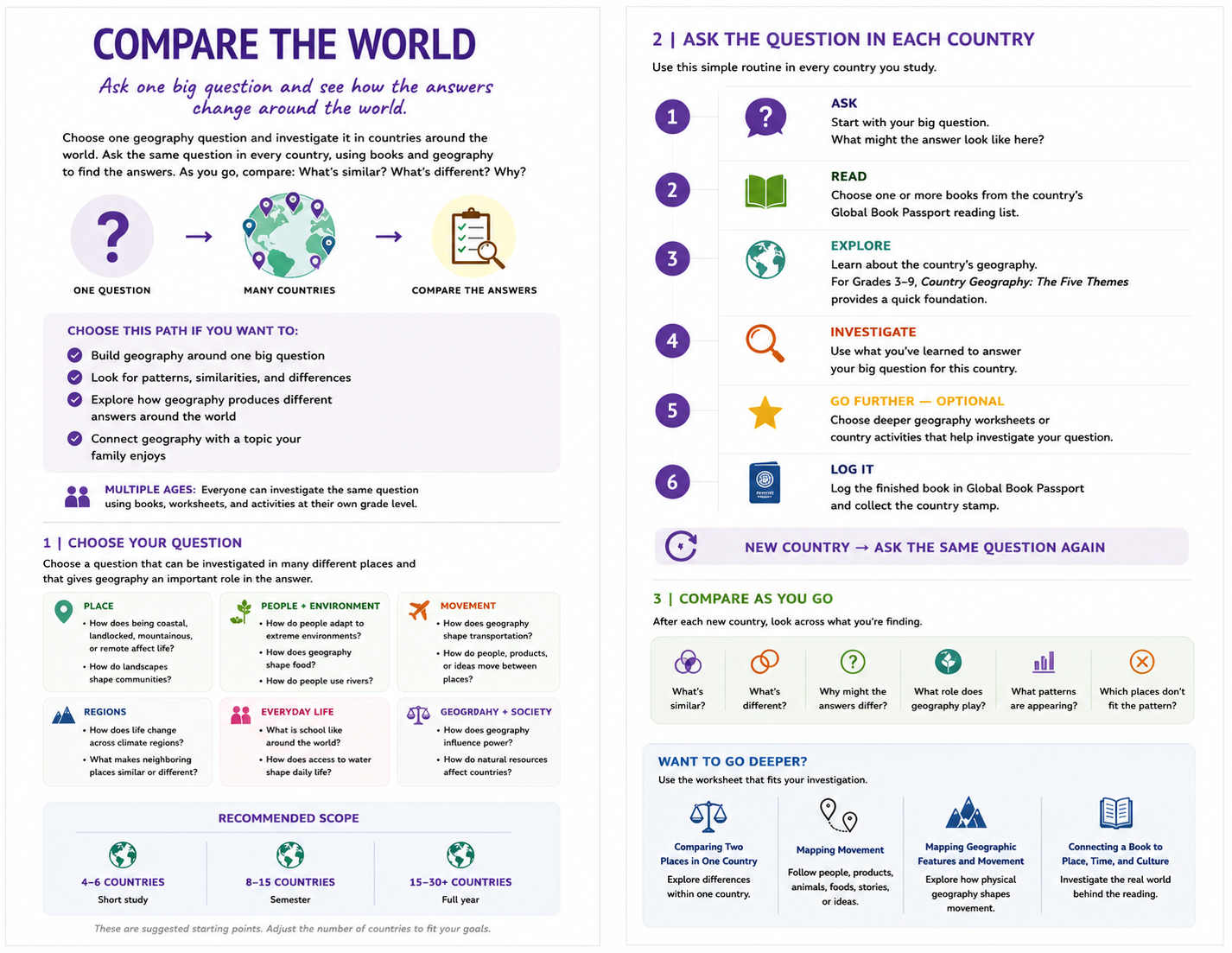
Compare the World
Ask one big question and see how the answers change around the world. Explore a topic such as food, climate, water, transportation, or everyday life across multiple countries, comparing what you discover and how geography helps explain the differences.
Great for: Flexible breadth or depth, especially for students who enjoy investigating patterns, making connections, and digging into a particular question.
Open guide ↗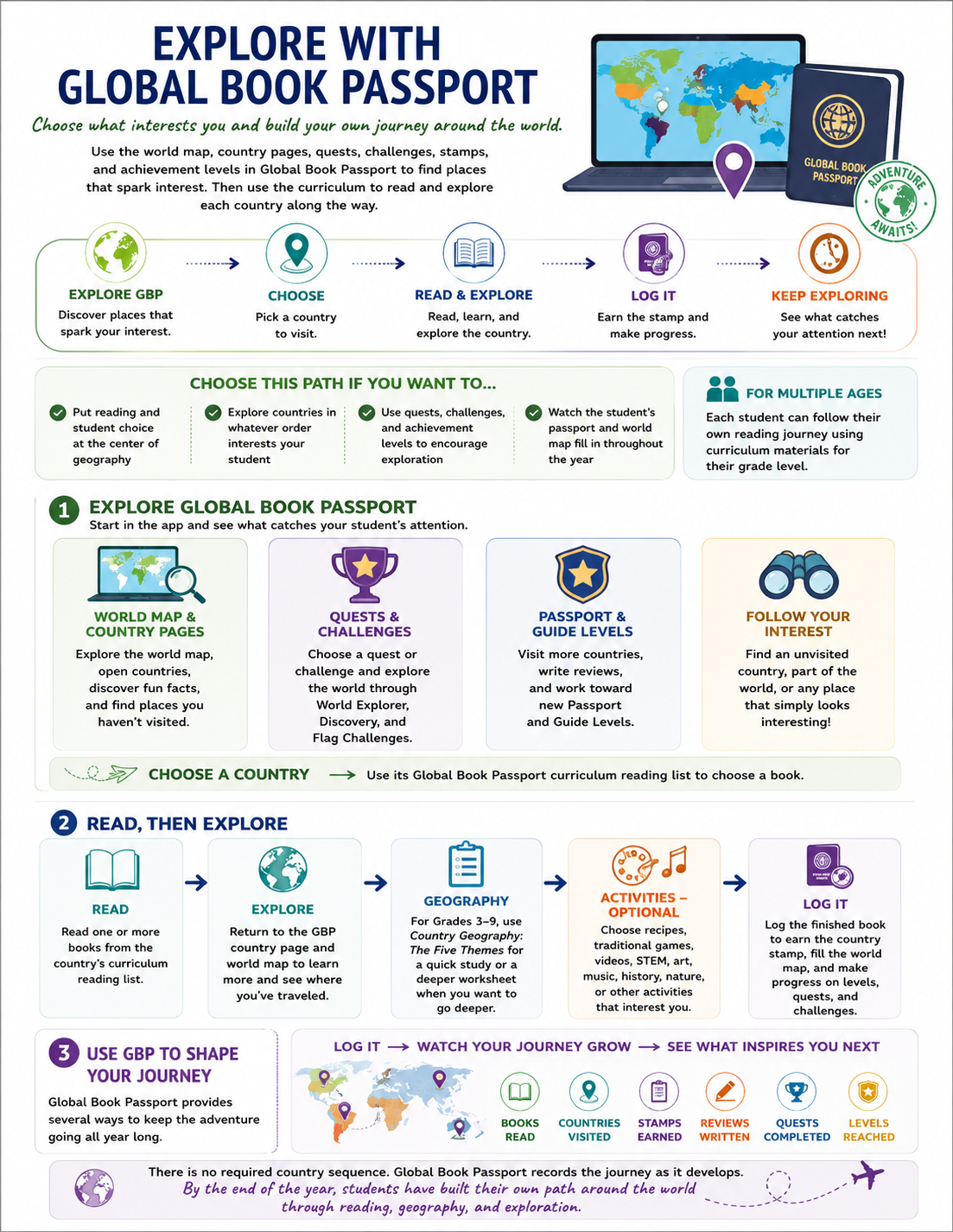
Choose Your Own Journey
Let your student's interests shape the itinerary. Use the Global Book Passport map, country pages, quests, challenges, and achievement levels to choose where to explore next, then use the curriculum to read and learn about each country along the way.
Great for: Maximum flexibility — cover lots of countries, dive deeply into favorites, or mix the two as interests develop.
Open guide ↗See It in Action
Real examples showing what each pathway can look like in practice — use them as ready-made starting points or as inspiration for your own.
 Example
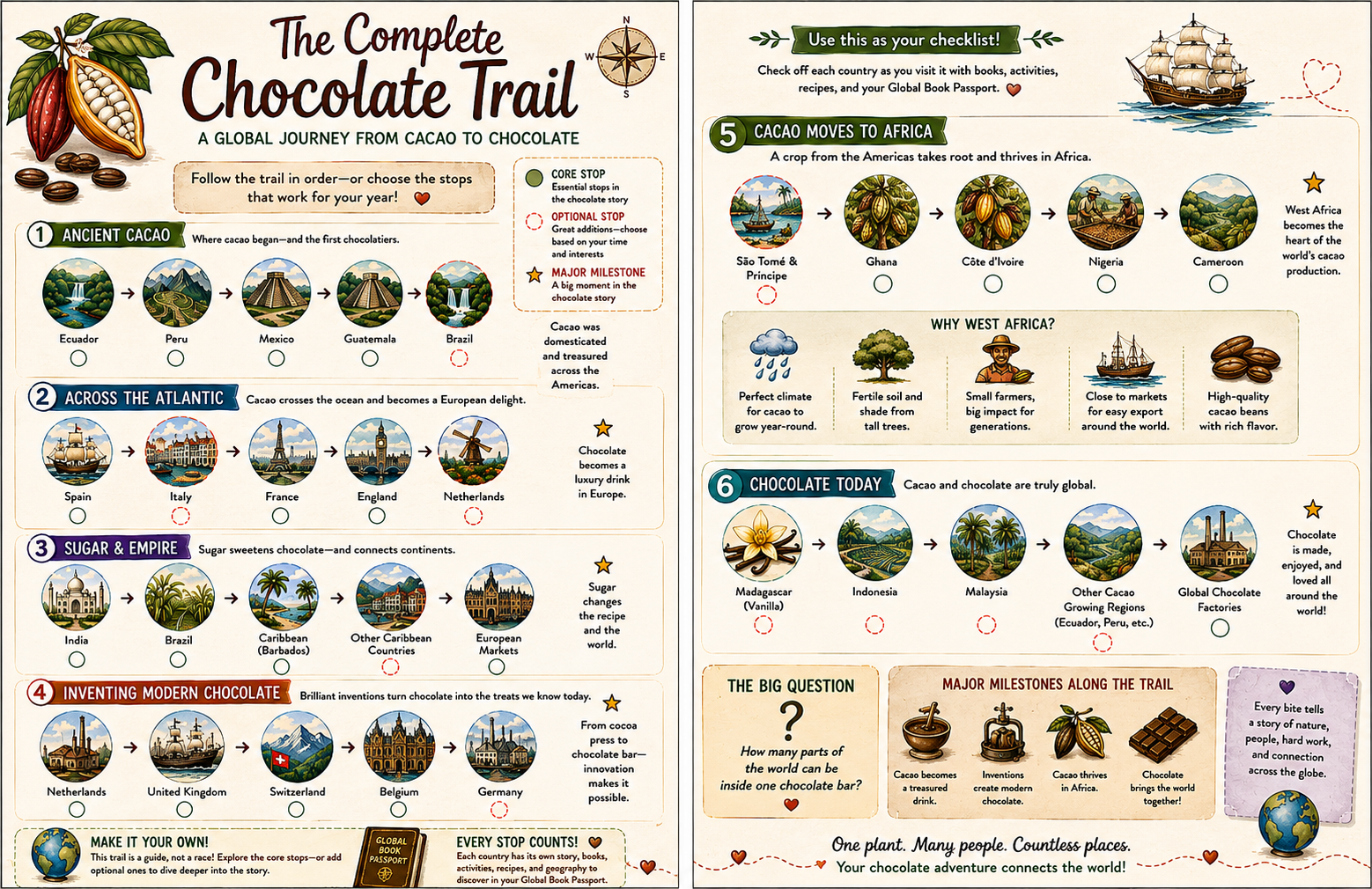
The Chocolate Trail
Follow a Trail
See what the Follow a Trail pathway looks like in action — tracing cacao from its origins in the Americas through Indigenous traditions, global trade, European chocolate-making, West African cacao production, and the ingredients and places connected to a modern chocolate bar.
Use it as a ready-made trail or as inspiration for building your own around rivers, spices, coffee, animal migrations, trade routes, or another connection that crosses the globe.
Open example ↗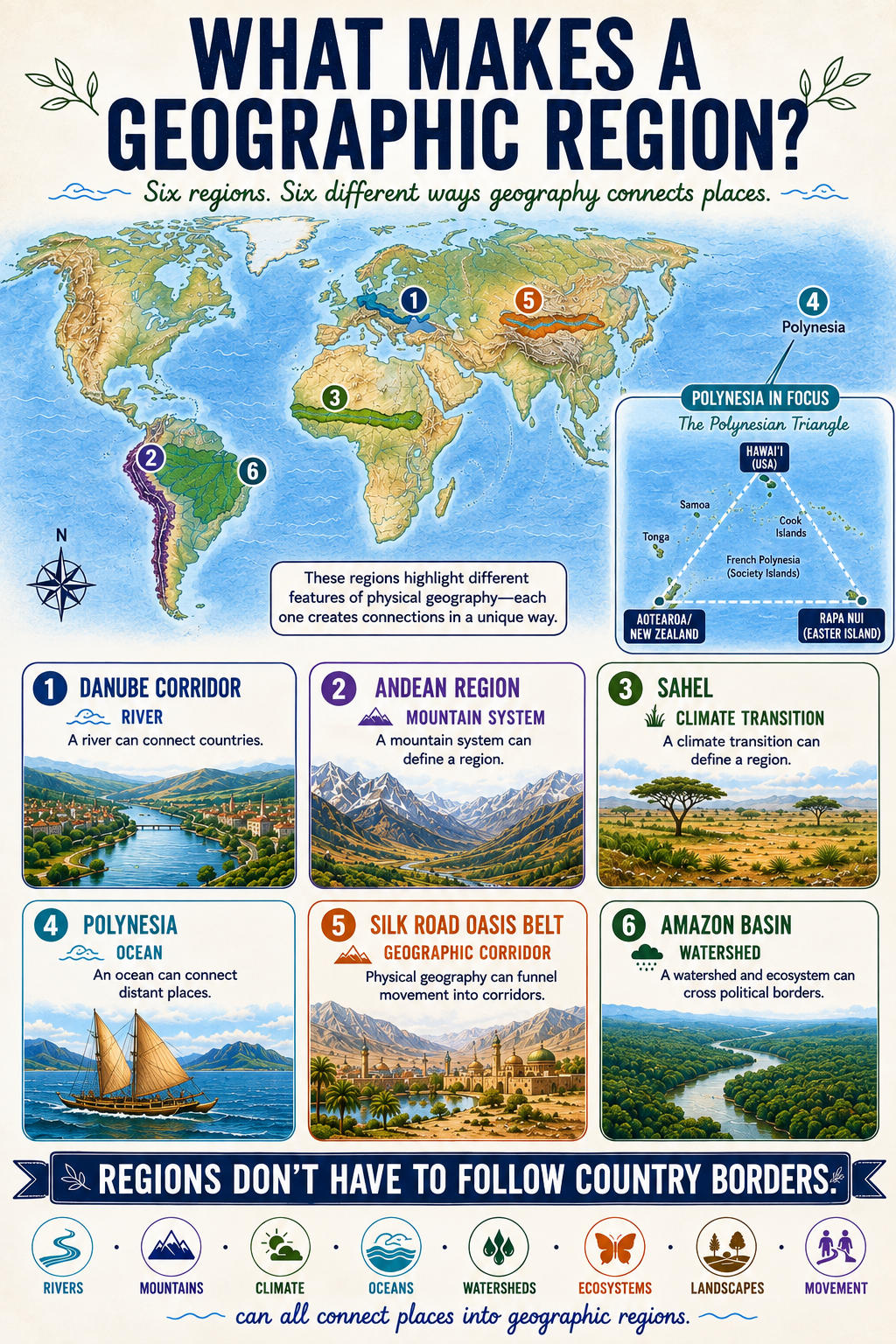 Example
Geographic Regions
Travel by Region
See what the Travel by Region pathway can look like in action through six very different geographic regions — from the Danube Corridor and Andes to the Sahel, Polynesia, Silk Road Oasis Belt, and Amazon Basin. Each example shows how rivers, mountains, climate, oceans, landscapes, and watersheds can connect places across country borders.
Use these examples as inspiration for building your own regional study around the geographic connections that interest your family or group.
Open example ↗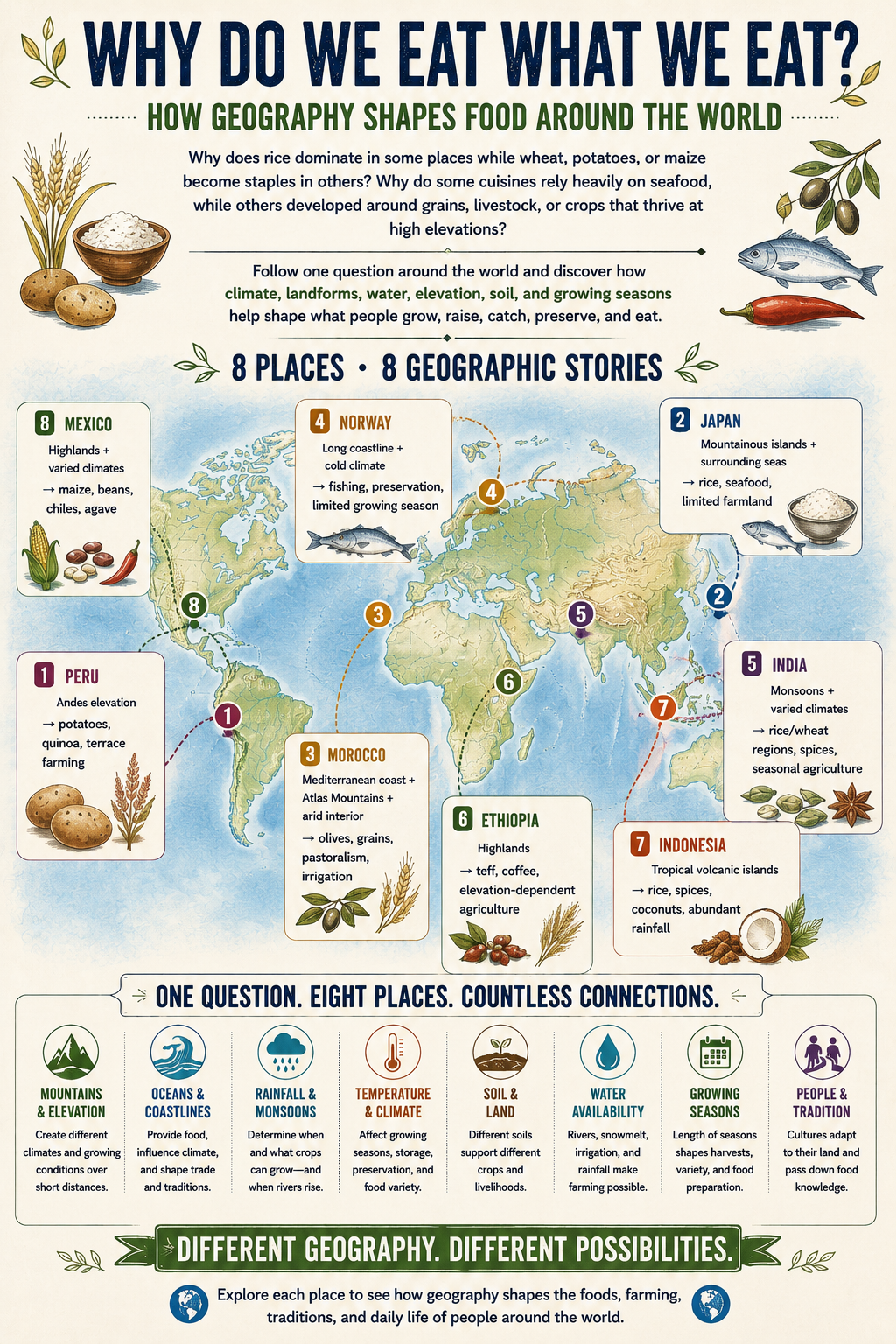 Example
How Geography Shapes Food
Compare the World
See what the Compare the World pathway can look like in action by asking one question across eight countries: How does geography shape food? Explore how mountains, monsoons, coastlines, climate, water, soils, and other geographic conditions influence what people grow, raise, catch, preserve, and eat.
Use it as a ready-made comparison or as inspiration for choosing your own question and investigating how the answer changes from place to place around the world.
Open example ↗