Peru
South America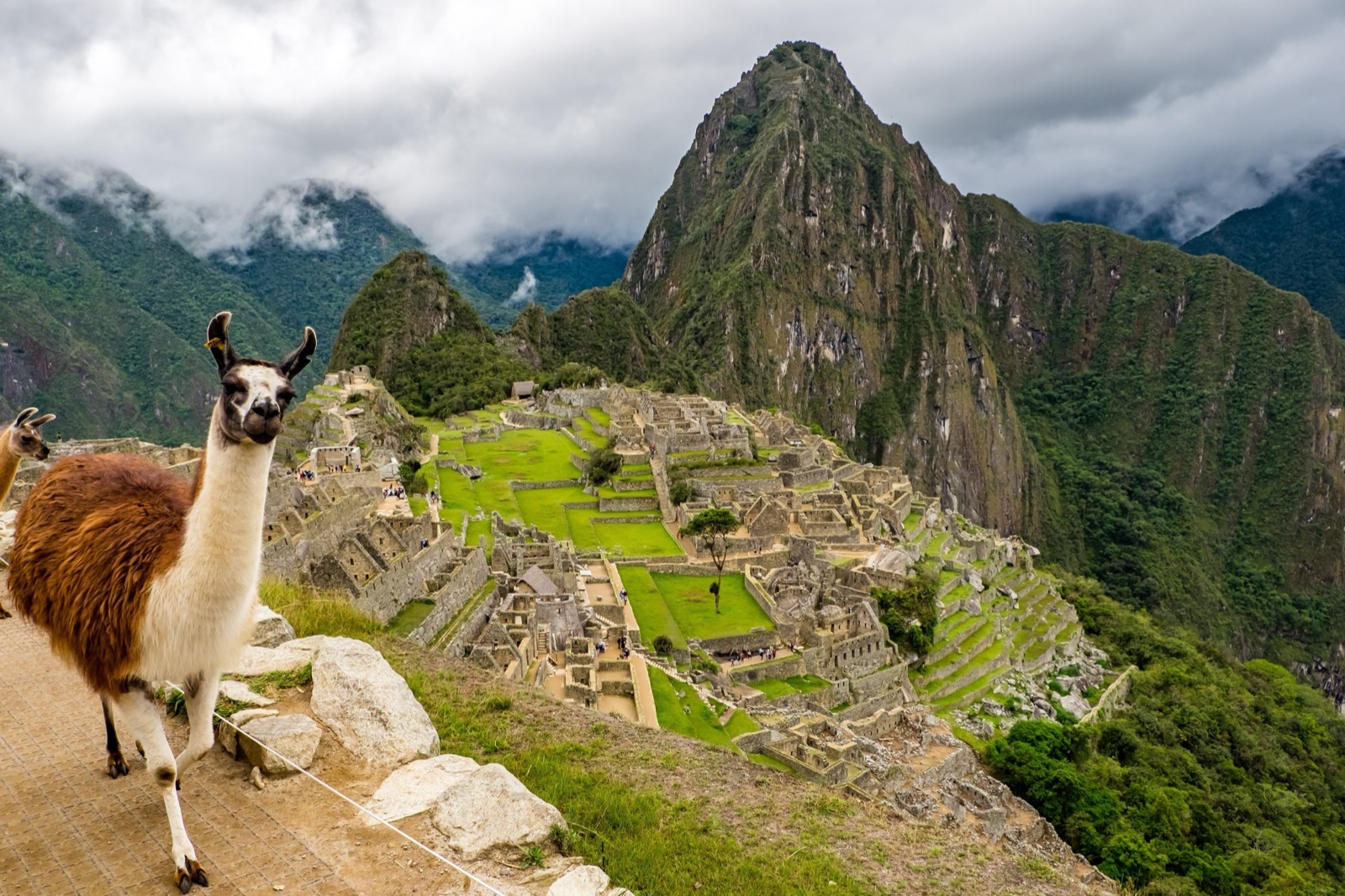
Cold water from the Southern Ocean flows north along the western coast of South America in a vast system known as the Humboldt Current. Winds along Peru's coast push surface water away from shore, allowing cold, nutrient-rich water from deep below to rise and replace it. This feeds huge populations of plankton and fish, making Peru's waters some of the richest fishing grounds on Earth. The cold water also limits evaporation and rainfall — helping create the remarkable contrast of an extremely dry desert coast beside an extraordinarily productive ocean.
The Andes Mountains form Peru's dramatic backbone, with peaks rising more than 6,000 meters and deep valleys cutting between them. Elevation changes the landscape dramatically: warm valleys can lie below cold grasslands and snow-covered peaks, shaping where people can farm, build communities, and travel. Peru's highest peak, Huascarán, rises 6,768 meters (22,205 feet) — high enough to remain covered in snow and glaciers even though Peru lies in the tropics.
The Amazon may be famous for its tropical rainforest, but some of its most distant headwaters begin among the cold peaks of the Peruvian Andes. Snowmelt, rain, and mountain streams flow east and downhill, eventually joining larger rivers in the Amazon Basin. Water that begins among snowcapped peaks in Peru can ultimately travel thousands of kilometers through the world's largest rainforest before reaching the Atlantic Ocean.
Peru is often divided into three dramatically different geographic regions: the costa (Pacific coast), sierra (Andean highlands), and selva (Amazon rainforest). The costa is largely desert but contains most of Peru's largest cities; the sierra rises through valleys and grasslands to snowcapped peaks; and the selva covers more than half the country in tropical forest. Traveling east across Peru can take you from Pacific desert to glaciers to Amazon rainforest.
- Lake Titicaca is a massive freshwater lake high in the Andes between Peru and Bolivia. At 3,812 meters (12,500 feet) above sea level, the air is thin, the sun is intense, and the water stays cold even though the lake lies in the tropics. Centuries ago, the Uros, an Indigenous people of the region, began building floating islands from bundles of totora reeds to escape threats on the mainland. Some Uros still live on these islands today, continually adding fresh layers of reeds as the layers beneath them become waterlogged and decay.
- Peru is one of the most biologically diverse countries on Earth, partly because its landscape changes so dramatically from Pacific desert to high Andes to Amazon rainforest. More than 1,800 bird species have been recorded in Peru — roughly one out of every six bird species on Earth — including Andean condors, flamingos, macaws, hummingbirds, and even penguins along the Pacific coast.
Peru is home to about 34 million people, but they are very unevenly spread across its deserts, mountains, and rainforest — roughly one-third live in metropolitan Lima alone. The country's population reflects centuries of Indigenous history, Spanish colonization, African slavery, and later immigration from Europe and Asia. Millions of Quechua and Aymara people live in the Andes, while Peru's Amazon is home to more than 50 Indigenous peoples with distinct languages and traditions.
Spanish colonizers brought Catholicism to Peru in the 1500s, but many Indigenous Andean communities combined the new religion with much older beliefs of their own. Pachamama, or Mother Earth, may be honored alongside Catholic saints, and many festivals combine Catholic processions with Andean music, dance, clothing, and ceremonies. Over centuries, these traditions developed into forms of religious life that are distinctly Peruvian.
Most Peruvians speak Spanish, but dozens of Indigenous languages are also spoken across the country. Quechua — actually a family of related languages spoken in the Andes long before the Inca Empire — is still spoken by millions of people, while Aymara is important around Lake Titicaca and many other languages are spoken in the Amazon. English speakers already use several words that came through Quechua, including llama, condor, quinoa, puma, and jerky.
People in the Andes have been making elaborate textiles for thousands of years — long before the Inca Empire. Weavers use alpaca and sheep wool as well as cotton, creating colors and geometric patterns that can identify particular communities and carry cultural meaning. Traditional backstrap looms are simple enough to roll up and carry, yet skilled weavers use them to produce extraordinarily intricate cloth entirely by hand.
- The Inca Empire connected its enormous territory with the Qhapaq Ñan, a road network stretching more than 30,000 kilometers through mountains, deserts, and rainforest across six modern countries. The Inca had no horses or wheeled transportation, so people and llama caravans traveled on foot. Relay runners called chasquis carried messages along the roads, with fresh runners taking over at stations along the route.
- Machu Picchu was never really “discovered” by Hiram Bingham in 1911. Local Quechua-speaking families knew the ruins were there, and people were farming nearby when Bingham arrived. A local farmer helped lead him to the site; Bingham’s expedition brought Machu Picchu to international attention, while the people who had never forgotten it received far less recognition.
The collision of tectonic plates that built the Andes also helped concentrate enormous deposits of copper, silver, zinc, and gold beneath Peru’s mountains. Huge mines high in the Andes extract these minerals for sale around the world, providing a major share of Peru’s export income. But mining also requires land and large amounts of water, creating serious conflicts when mines and nearby rural or Indigenous communities depend on the same resources.
Billions of small anchoveta gather in enormous schools off Peru’s coast, feeding on the plankton that thrives in its cold, nutrient-rich waters. These tiny fish support one of the world’s largest fisheries, with much of the catch processed into fishmeal and fish oil used around the world. But every few years, El Niño can bring unusually warm Pacific water toward Peru, disrupting the cold, nutrient-rich conditions. Anchoveta move or decline, and fishing catches can plummet.
Much of Peru’s Pacific coast is desert, yet some of the country’s most productive farmland lies there. Rivers flowing down from the Andes carry water across the dry landscape, and irrigation channels direct it onto fields producing grapes, blueberries, avocados, asparagus, and other crops. Water that falls high in the Andes can ultimately make it possible to grow fruit and vegetables in a desert beside the Pacific Ocean.
In just six years, from 2016 to 2022, Peru had six different presidents. Peru is a presidential democracy, but resignations, impeachments, corruption scandals, and repeated clashes between presidents and Congress have produced extraordinary political instability. Peru continues to hold national elections, but repeated political crises have left many Peruvians deeply dissatisfied with their government.
- The Andes are the birthplace of one of the world’s most important foods: the potato. Indigenous Andean farmers domesticated potatoes thousands of years ago and developed thousands of varieties suited to different elevations and climates. They also created chuño, a naturally freeze-dried potato, by leaving potatoes to freeze during frigid mountain nights and dry beneath the intense high-altitude sun. Chuño can be stored for years, providing food through poor harvests and long Andean winters.
- Peru’s food tells the story of people arriving from around the world. Chinese immigrants in the 1800s helped create chifa, a distinctly Peruvian-Chinese cuisine, while Japanese immigration later produced Nikkei cooking, combining Japanese techniques with Peruvian ingredients. Along with Indigenous, Spanish, and African influences, these traditions helped turn modern Peru into one of the world’s most celebrated food cultures.
Recipes
For the whole familyAlfajores (Sandwich Cookies)
Alfajores have roots that reach through Iberia to the Islamic world and were adapted throughout Latin America. In Peru, delicate flour- or cornstarch-based cookies filled with manjar blanco are a familiar sweet for parties, cafés, and family treats; neighboring countries have their own distinct versions.
Tender shortbread-style cookies sandwiched around dulce de leche/manjar blanco and dusted with powdered sugar
Difficulty: Moderate; the cookies must be mixed, baked, cooled, and filled.
Papa a la Huancaína
Papa a la Huancaína is associated with Peru's central highlands and the Lima–Huancayo corridor, although its exact origin story is debated. Potatoes and ají peppers are ancient Andean foods, while cheese, milk, crackers, eggs, and olives reflect later additions to Peruvian cooking.
Boiled potatoes covered with a creamy queso fresco and yellow-chile sauce, often served with egg and olives
Difficulty: Moderate; the sauce is simple to blend, but an adult should handle boiling and hot ingredients.
Traditional Games
All agesWind, launch, and balance a spinning top, a traditional game still played by children in Peru and many parts of Latin America. A traditional trompo is wound tightly with string and thrown so that it spins on its point; skilled players may keep it spinning for a long time or lift it onto a hand.
Toss, balance, and hop through a numbered court in a game played in Peru and across Latin America. Court designs and local rules vary, but the basic challenge combines an accurate toss with hopping and balance.
Activities
Listen to Andean Panpipes
Hear how panpipe players combine separate notes to make one shared melody.
Make Your Own Siku Panpipes
Cut straws to different lengths and tape them together to make a working panpipe — the same instrument played in the Andes for thousands of years
Weave on a Cardboard Loom
Learn over-under weaving on a homemade cardboard loom — the same technique behind Peru's famous textiles
Make a Toilet Roll Llama
Turn a cardboard tube into an Andean llama complete with a colorful neck garland — the beloved pack animal of the Andes
Clap and Stomp to "Valicha" Huayno
Listen to the most famous Andean huayno — the traditional mountain music of Cusco — and clap or stomp along
Watch Inti Raymi in Cusco
Watch today's Festival of the Sun fill Cusco with music, procession, costume, and public performance.
Peru's Potato Diversity
Compare the colors, shapes, and sizes of native potatoes and see why Peru is a center of potato diversity.
Manu: From the Andes to the Amazon
Follow one Peruvian national park from high grasslands through cloud forest to lowland Amazon rainforest.
Make a Mini Khipu
Tie cords and knots to make a simple counting model inspired by Inka record keeping.
Map Peru's Coast, Andes, and Amazon
Shade Peru's three broad geographic zones and place a few landmarks where they belong.
Watch Peruvian Marinera
Watch partners use handkerchiefs, footwork, circling, and approach-and-retreat patterns in Peru's marinera.
Nazca Lines: Reveal a Design by Subtraction
Test how removing a dark surface layer can reveal lighter ground, then compare the effect with Peru's enormous desert geoglyphs.
Why Peru's Pacific Is So Productive
Model how the Humboldt Current and coastal upwelling help support huge numbers of fish along Peru's Pacific coast.
Highland Route: Cusco to Pisac
Trace a real route through the Sacred Valley and see how mountains and river valleys channel travel.
Who Owns Machu Picchu's Past?
Hiram Bingham 'discovered' it in 1911 and took 46,000 objects to Yale. Peru spent a century getting them back.
Túpac Amaru II and Micaela Bastidas: Rebellion and Memory
Examine how an eighteenth-century anticolonial rebellion became part of Peru's national memory.
Explore the Qhapaq Ñan
Follow the Inka road network across mountains, valleys, rainforest, and desert to see how roads connected an empire.
Q'eswachaka Rope-Bridge Engineering Challenge
Twist small fibers into stronger cords and compare your model with a bridge rebuilt by Quechua communities each year.
Moche Portrait Vessels
Study ceramic faces from Peru's north coast and sketch how artists used clay to make individual people recognizable.
Peru's Living Language Map
Use an official ethnolinguistic map to see how Peru's Indigenous languages cluster across mountains, forests, and regions.
Lima: A Desert Metropolis
Use satellite imagery to see how Peru's largest city grew between the Pacific Ocean and one of the world's driest coastal landscapes.
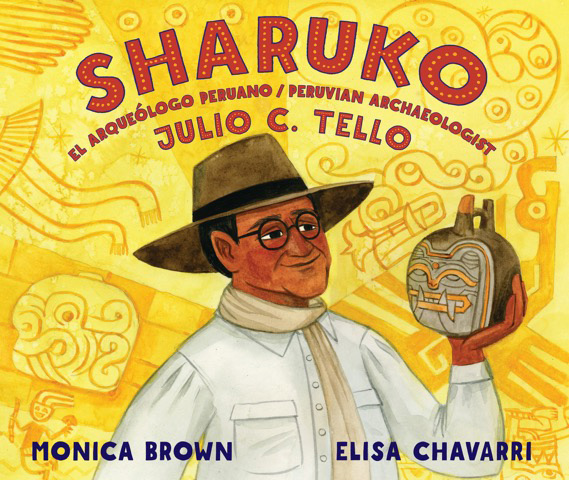
Picture Books
Recommended for grades K–4 and family read-alouds. Short, illustrated books suited to independent or shared reading; some explore subjects that older students can study more deeply.
Middle Grade

Grade 9 / Advanced
Recommended for grades 8–9 and up. More demanding in length, language, structure, subject matter, or required background knowledge.

Reference Books
A note for parents
Grade recommendations are based on reading level, complexity, and intended audience. Because every student and family is different, please review the book descriptions and content notes, and preview titles as needed, to determine whether each selection is a good fit for your student and your family's values. Content notes identify potentially sensitive material but may not cover every concern.