Curriculum › Oceania › Western Polynesia

Western Polynesia

Oceania
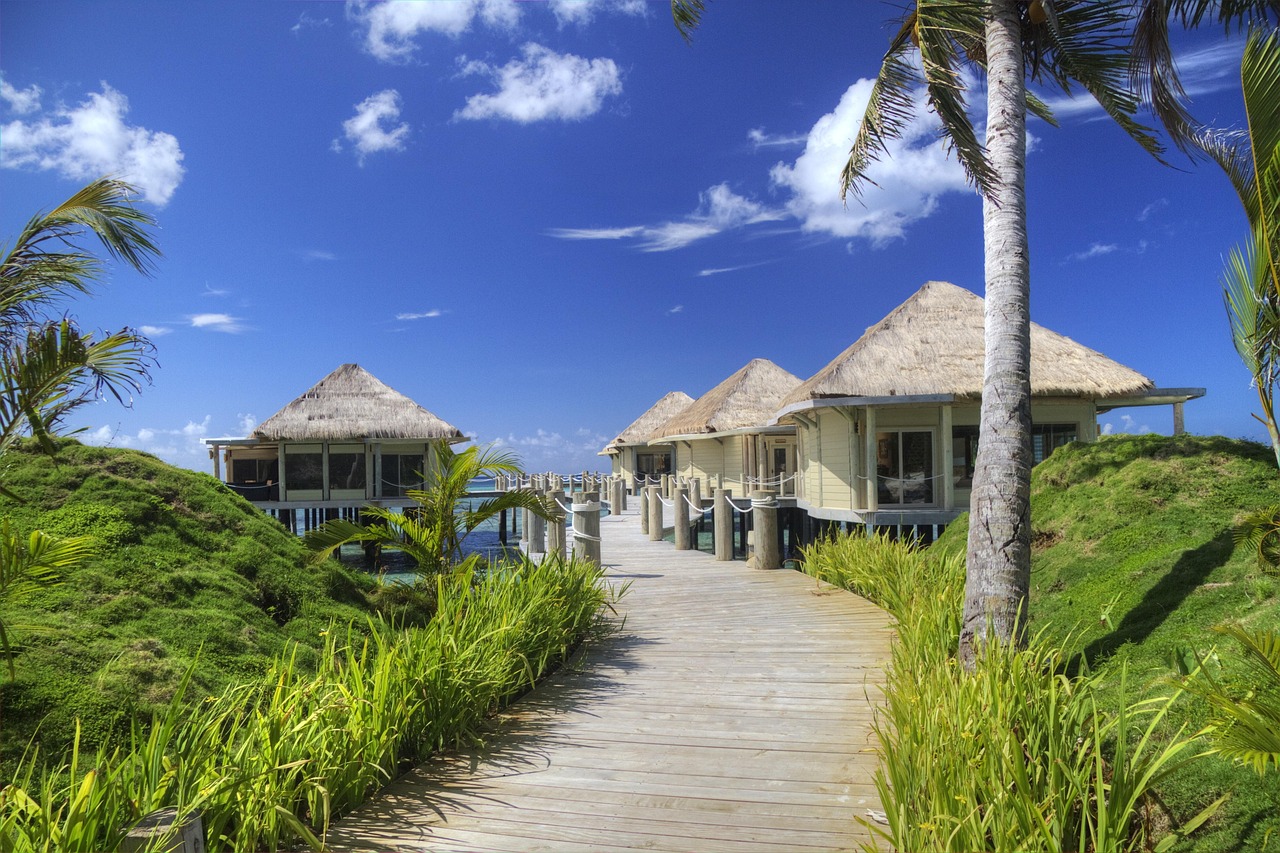
Thatched-roof bungalows built over the water, reached by a wooden boardwalk and framed by palm trees
Samoa
Independent state
Capital
Apia
Language
Samoan, English
Currency
Samoan tālā (WS$)
Population
~205,000
American Samoa
U.S. territory
Capital
Pago Pago
Language
Samoan, English
Currency
U.S. dollar (US$)
Population
~50,000
Tonga
Kingdom
Capital
Nukuʻalofa
Language
Tongan, English
Currency
Paʻanga (T$)
Population
~100,000
Tuvalu
Independent state
Capital
Funafuti
Language
Tuvaluan, English
Currency
Australian dollar (A$)
Population
~10,600
Tokelau
Territory of New Zealand
Capital
None (three atolls)
Language
Tokelauan, English
Currency
New Zealand dollar (NZ$)
Population
~1,500
Wallis and Futuna
French overseas collectivity
Capital
Mata-Utu
Language
French, Wallisian, Futunan
Currency
CFP franc (XPF)
Population
~11,500
Map borders may not reflect disputed territories.
Tuvalu: Low Coral Islands

Tuvalu’s nine islands are low coral islands, most of them atolls: rings of coral reef around a lagoon, with narrow strips of land made of coral rock and sand. An atoll grows over a very long time as coral keeps building upward while the volcano beneath it slowly sinks. The highest point anywhere in Tuvalu is only about 15 feet above sea level, about as tall as a giraffe, and only the Maldives has a lower highest point. Coral rock is full of tiny holes, like a sponge, so at the highest tides, called king tides, seawater pushes up through the ground and floods low areas from below. Sea level around Tuvalu’s main atoll is also rising about twice as fast as the global average.

Samoa: Islands Built by Volcanoes

The Samoan islands are the peaks of huge volcanoes that rise from the ocean floor, with most of each volcano hidden underwater. Savaiʻi, the westernmost island, is where the last eruption on land in Samoa happened. From 1905 to 1911, Mount Matavanu erupted, sending lava toward the north coast and burying the villages of Toapaipai, Salago and Saleaula. By 1906 the lava covered about 35 square miles, an area larger than Manhattan, and volcanic fumes destroyed crops and caused famine. The people of Saleaula and other villages moved across the strait to Upolu, and hardened lava still covers the area where their villages once stood.

Tonga: Trench & Volcanoes

Tonga lies beside a deep trench in the seafloor where one giant plate of the Earth’s crust, the Pacific Plate, is sliding beneath another. The sinking plate melts rock, which rises to feed a chain of volcanoes, many of them underwater. In January 2022 one of them, Hunga Tonga–Hunga Haʻapai, erupted with a blast heard in Alaska, about 5,800 miles away, and sent an ash plume about 35 miles into the sky, far higher than the 7 miles at which airliners fly. A tsunami struck Tonga’s west coast and killed at least three people, and the eruption broke Tonga’s only undersea internet cable, which took about five weeks to repair.

Tokelau: Atolls & Fresh Water

Tokelau is made up of three atolls, Atafu, Nukunonu and Fakaofo, and each is a ring of small coral islands around a lagoon. Together they have only about 4 square miles of land, and the highest point is only 16 feet above the sea. There are no rivers or streams, so families catch rain from their roofs in tanks. In 2011, after about six months with very little rain, the tanks ran dry, and the islands ran out of fresh water until Samoa, New Zealand and the United States shipped in water.

Did you know?
  • When Tonga’s Hunga Tonga–Hunga Haʻapai volcano erupted in 2022, its towering ash cloud produced up to 2,600 lightning flashes per minute — more than 40 every second. It was the most intense volcanic lightning storm ever recorded.
  • Near Tonga, the Pacific Plate sinks beneath another tectonic plate at up to 9 inches per year, one of the fastest rates on Earth. As it descends, it helps generate magma that feeds Tonga’s chain of volcanoes.
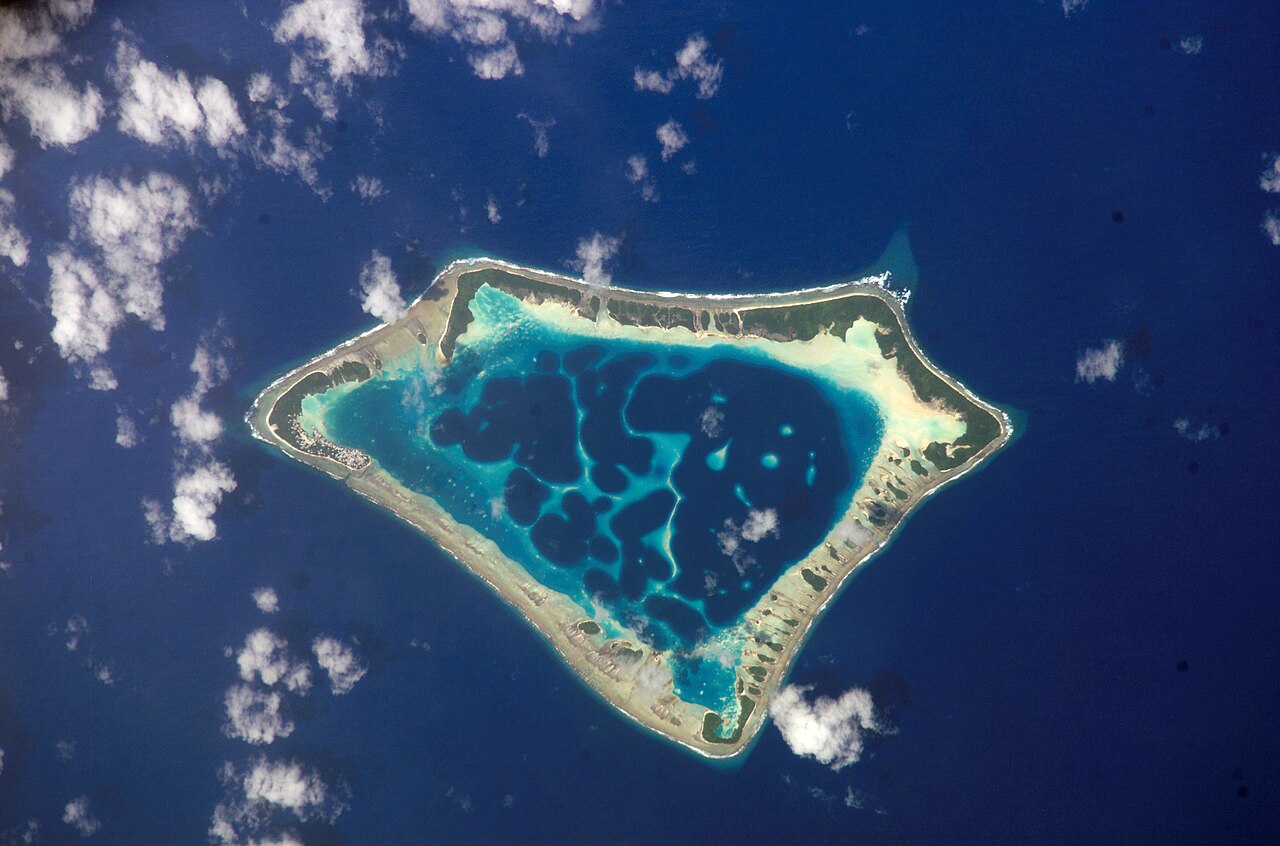
A view from space of Atafu Atoll, a ring of narrow islands around a turquoise lagoon with dark blue patches, in deep blue ocean1
Tokelau

Atafu Atoll

Atafu Atoll in Tokelau is a ring of tiny coral islands surrounding a wide, turquoise lagoon, formed as an ancient volcanic island slowly sank beneath the ocean. Millions of years ago, coral reefs began growing in the shallow water around the volcano's shores. As the volcanic island gradually sank, the coral continued growing upward toward the sunlight, keeping the reef near the ocean's surface. Eventually, the volcano disappeared underwater, leaving the ring of coral islands surrounding a lagoon where the island once stood.

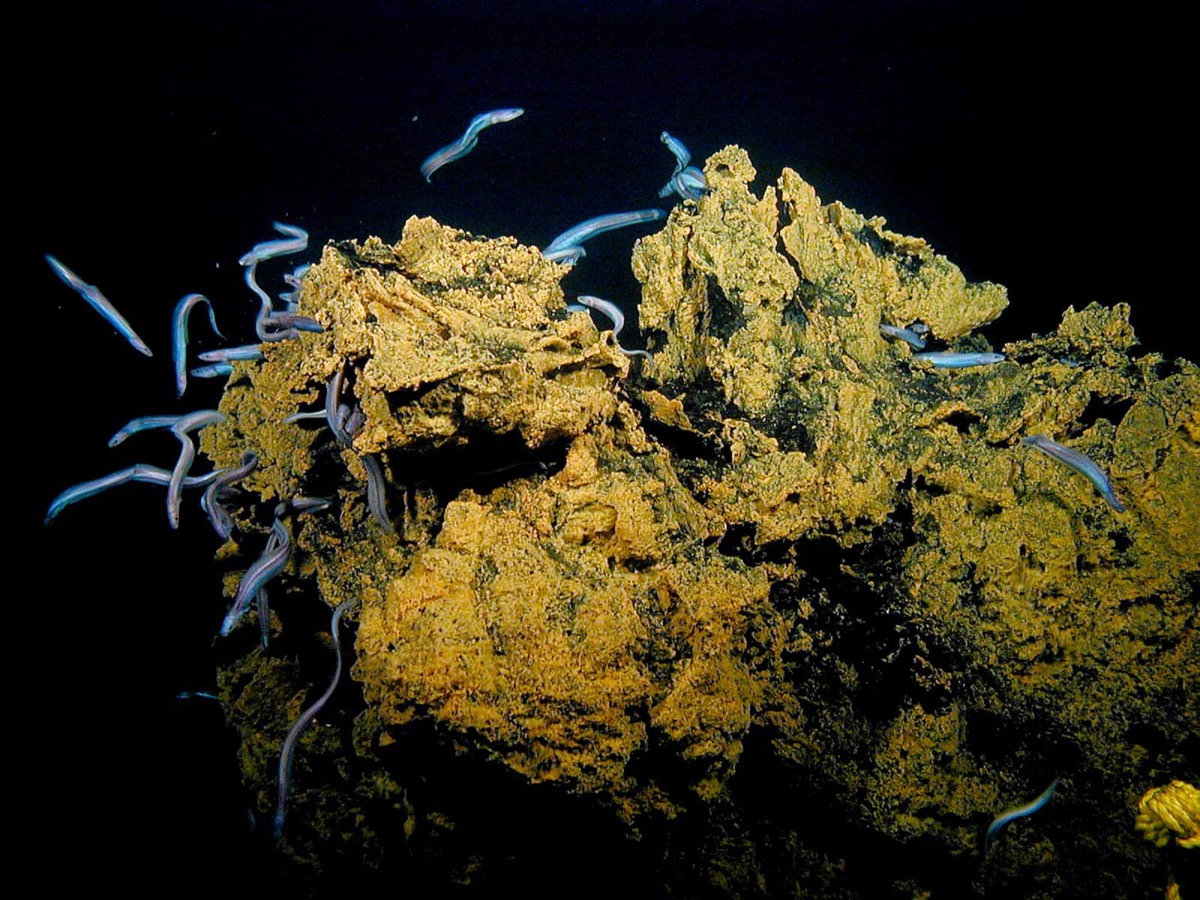
Pale blue eels swimming around golden-yellow volcanic rock in the dark deep sea2
American Samoa

Vailuluʻu Seamount

Deep beneath the ocean near American Samoa, Vailuluʻu Seamount is an active underwater volcano with an unusual colony of hundreds of eels living inside its crater. Hot, mineral-rich water escapes through cracks in the volcanic rock, creating acidic, oxygen-poor conditions that are dangerous for most marine animals. However, the eels shelter among rocks near cooler vents, where ocean currents bring small shrimp for them to eat. This combination of shelter and a steady food supply allows the eels to survive in an otherwise hostile environment, earning their remarkable habitat the nickname “Eel City.”

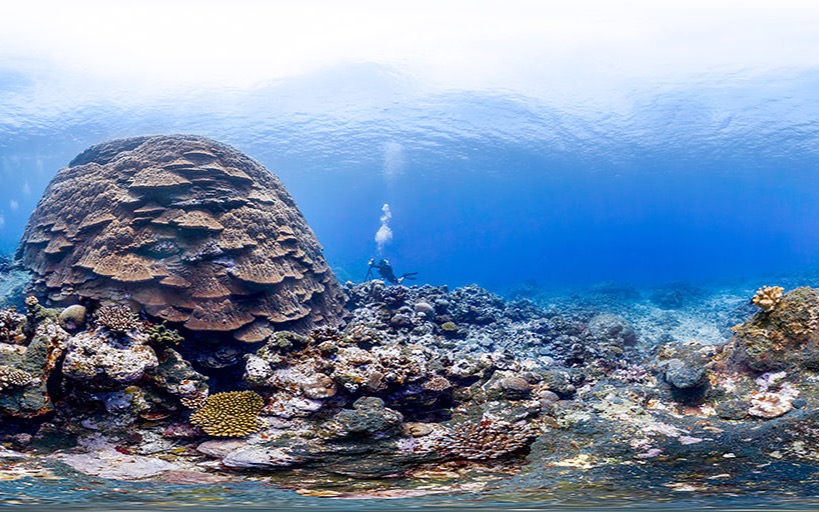
A huge dome-shaped coral colony on a reef, with a scuba diver far smaller beside it for scale3
American Samoa

Giant Corals of Taʻū Island

Beneath the waters of Taʻū Island in American Samoa, some of the world's largest coral colonies have grown for centuries, with one reaching 26 feet tall and more than 72 feet across. Each colony is built by tiny animals called coral polyps, which create hard limestone skeletons that gradually accumulate as new generations grow on top of older ones. This slow growth makes corals vulnerable to storms, unusually warm water, and pollution, which can damage or destroy colonies before they reach enormous sizes. But Taʻū's relatively stable ocean conditions and limited human disturbance may have allowed its corals to survive and keep growing for more than 500 years, producing over 80 giant colonies measuring at least 33 feet across.

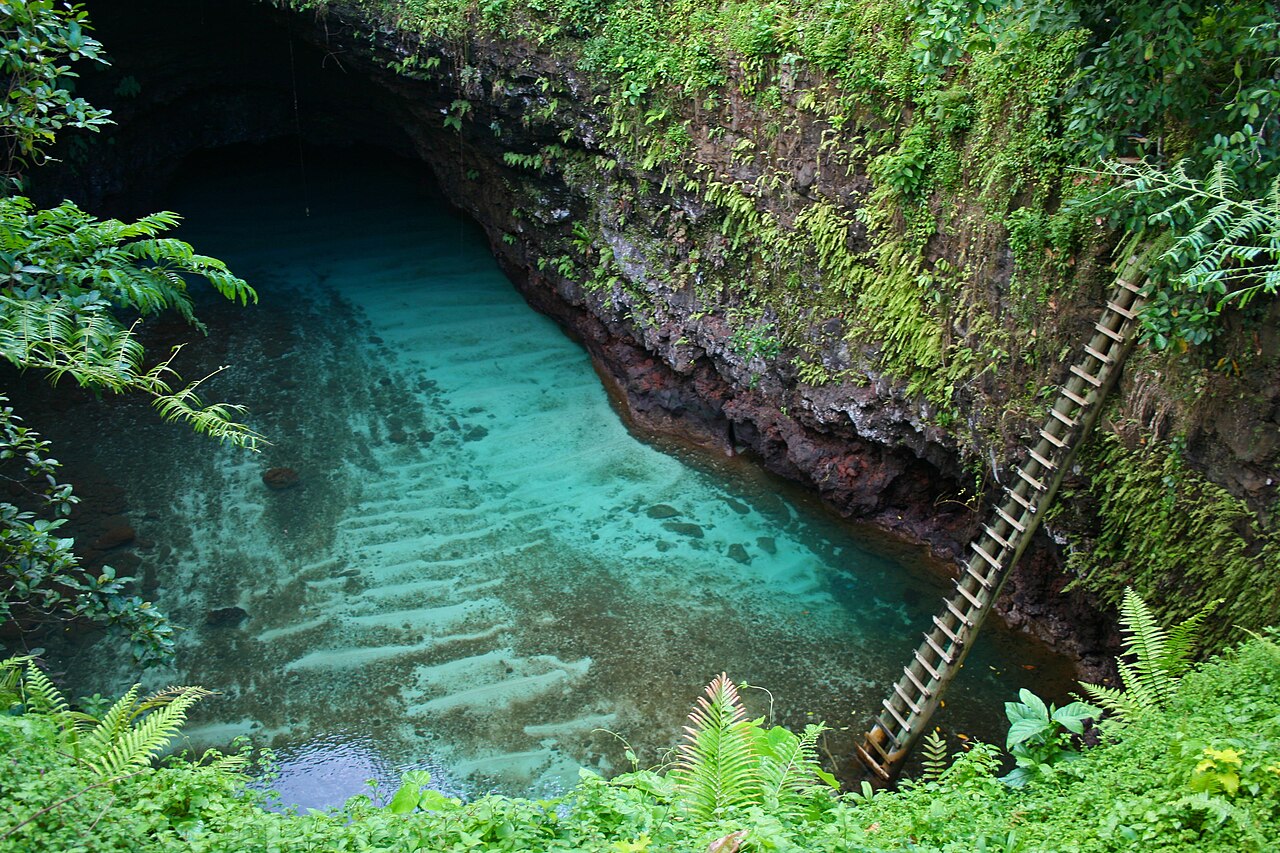
A turquoise pool at the bottom of a deep, fern-covered pit in the ground, with a wooden ladder leading down the side4
Samoa

To-Sua Ocean Trench

On Samoa's island of Upolu, To-Sua Ocean Trench is a seawater pool nearly 100 feet below ground, connected to the ocean through underground lava tunnels. About 1,400 years ago, lava erupted from the nearby Fogalepulu volcano and flowed toward the coast. As the surface of the lava hardened into rock, molten lava continued flowing underneath, eventually draining away and leaving hollow tunnels. Part of one tunnel's roof later collapsed, creating a deep opening that exposed the pool below. The remaining tunnels still connect the pool to the ocean, allowing its water level to rise and fall with the tides.

Samoa & American Samoa

Sapasui (Samoan Chop Suey)

Sapasui is a Samoan adaptation of Chinese chop suey, reflecting the influence of Chinese migration and cultural exchange on the islands. Made with vermicelli noodles, soy sauce, ginger, garlic, onions, and meat, it has become a staple of Samoan family meals, Sunday lunches, and celebrations. Different families prepare their own versions, making sapasui a distinctive part of modern Samoan food culture.

What it is: Savory vermicelli noodles cooked with beef, onions, garlic, ginger, and dark soy sauce.

Difficulty: Easy to moderate — the ingredients are readily available in U.S. supermarkets, but Sarah's recipe requires cutting and simmering beef before combining it with the noodles.

Tonga

Faikakai Malimali (Tongan Banana Dumplings)

Faikakai is a family of traditional Tongan desserts made with cooked dumplings or starches and sweet coconut sauce. Faikakai malimali combines ripe bananas with flour and coconut to make soft dumplings, which are boiled and served with toasted coconut and a rich coconut-cream syrup. The dish highlights ingredients that have long been important in Tongan food traditions, especially bananas and coconut.

What it is: Boiled banana dumplings coated with toasted coconut and served with sweet coconut syrup.

Difficulty: Moderate — the dumplings are straightforward to prepare, but boiling them, toasting coconut, and making the hot syrup require adult assistance.

Wallis and Futuna

Faikai Malaulau (Wallis and Futuna Cassava Dumplings)

Faikai malaulau is a comforting dessert from Wallis and Futuna, a French territory whose Polynesian culture is closely tied to Samoa and Tonga. Traditionally the dumplings are wrapped in banana leaves and cooked in an underground oven called an umu, and the stovetop version keeps the flavor without one.

What it is: Cassava dumplings simmered in a caramel sauce of coconut milk and sugar.

Difficulty: Moderate — the dough is simple, but the hot caramel spits and can clump, so an adult should make the sauce; the recipe lists metric measurements, so a kitchen scale helps.

Samoa & American Samoa
Lape (Samoan Handball)
3–56–8Grade 9

Lape is a traditional Samoan ball game similar to softball, except players strike the ball with their hands rather than a bat. It is played in teams and combines running, catching, throwing, and strategy. Samoan children continue to play lape today, including at schools and cultural celebrations.

A soft foam ball, four cones or markers for bases, and an open grassy area. At least four players, preferably six or more.
Mark four bases in a diamond, as in softball. Divide players into a batting team and a fielding team. A fielder gently tosses the ball toward the batter, who strikes it with an open hand and runs toward first base. Fielders retrieve the ball and try to get runners out by catching the ball before it lands or returning it to a base before a runner arrives. Players score one point for completing a circuit of the bases. After everyone has had a turn batting, switch teams. Play an agreed number of innings. This is a simplified family adaptation; traditional rules may vary between communities.
Tonga
Hiko (Tongan Juggling)
K–23–56–8Grade 9

Hiko is a traditional Tongan juggling game historically played by girls and women, using candlenuts tossed rhythmically between the hands while participants sang or chanted. Skilled players could juggle four or five nuts at once, and competitions tested how long they could continue without dropping them. The tradition is still demonstrated and taught by Tongan cultural practitioners.

Three to five soft juggling balls or small rolled-up socks, and an open space.
Begin with one ball, tossing it from hand to hand at a steady rhythm. Add a second ball, practicing until you can keep both moving without dropping them. Progress to three or more as your coordination improves. Watch the linked video to see how traditional Tongan hiko uses a cascading circular pattern and rhythm. Challenge yourself to complete five, ten, or twenty consecutive catches. Younger children can begin with one or two balls.
Tokelau
Faimunikiokiō (Tokelauan Hide-and-Seek)
K–23–56–8

Faimunikiokiō is a traditional Tokelauan team hide-and-seek game, historically enjoyed outdoors, especially by moonlight. Unlike ordinary hide-and-seek, players divide into two teams: hiders attempt to reach an agreed destination while seekers try to catch them. The game combines hiding, strategy, running, and teamwork.

At least four players, an outdoor area with safe hiding places, and a designated destination or home base.
Divide players into two teams: seekers and hiders. Agree on a playing boundary and designate a tree, cone, or other landmark as the destination. The seekers close their eyes and count while the hiders scatter. When counting finishes, the seekers try to catch the hiders before they reach the destination. Hiders who reach it without being caught are safe. If no hiders reach the destination, the teams exchange roles. Players who leave the agreed boundary are out. For younger children, use a smaller area and play during daylight.
VideoSamoa & American Samoa

Watch Children Perform Samoan Siva

Watch a traditional Samoan dance and discover how dancers use graceful movements to communicate stories and emotions.

Hands-OnSamoa & American Samoa

Build a Miniature Samoan Fale

Build a model of a traditional Samoan house and discover how its open design helps people stay comfortable in a tropical climate.

Virtual TourSamoa & American Samoa

Samoa's Lava-Covered Village

Explore a Samoan village where a volcanic eruption buried buildings and farmland beneath thick layers of lava.

Hands-OnTonga

Discover How Tongan Barkcloth Is Made

Discover how Tongan artisans transform tree bark into enormous decorated cloths, then experiment with making patterns through texture rubbings.

Hands-OnTuvaluTokelau

Build a Coral Atoll

Build a miniature coral atoll and discover why many islands in Tuvalu and Tokelau form narrow rings around shallow lagoons.

MusicTuvalu

Listen to a Tuvaluan Fatele

Watch a Tuvaluan group performance and discover how singing, clapping, and movement come together in a community tradition.

ScienceTokelau

Meet Tokelau's Colorful Reef Fish

Explore the fish living around Tokelau's coral reefs and discover how their bodies help them survive underwater.

Photo ExplorationWallis and Futuna

Discover Wallis Island's Crater Lakes

Examine an almost perfectly circular lake on Wallis Island and discover how volcanic activity can leave deep craters in the landscape.

Recommended for grades K–4 and family read-alouds. Short, illustrated books suited to independent or shared reading; some explore subjects that older students can study more deeply.
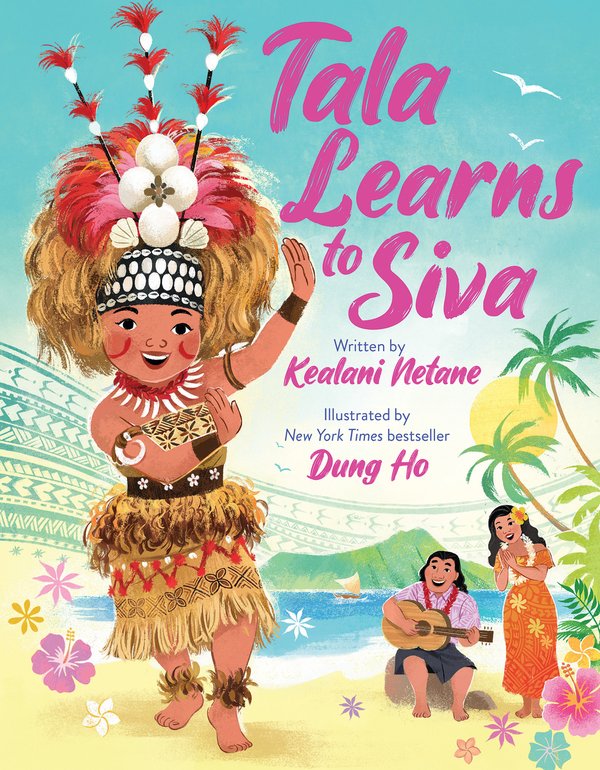
Tala Learns to Siva
Kealani Netane
Samoa & American Samoa Contemporary Fiction
Tala longs to dance the taualuga like her Aunty Sina, whose hands move like rolling waves and feet glide like canoes. But Tala's legs wobble, her arms stiffen, and when she freezes during a performance at her grandmother's birthday celebration, she must find her own way to tell a story through dance.
Course connections: Traditional Samoan dance
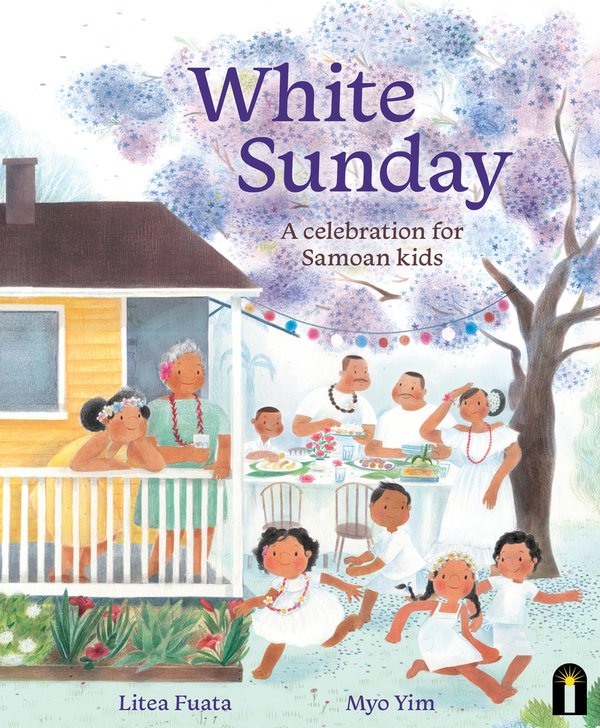
White Sunday: A Celebration for Samoan Kids
Litea Fuata
Samoa & American Samoa Contemporary Fiction
Sina can't wait for White Sunday, when Samoan children dress in white, perform songs and recitations at church, and enjoy a special feast with their families. Between the excitement of performing, delicious Samoan food, and games with her cousins, Sina's celebration is packed with surprises—including a hide-and-seek adventure that doesn't go quite as planned.
Course connections: Samoan holidays
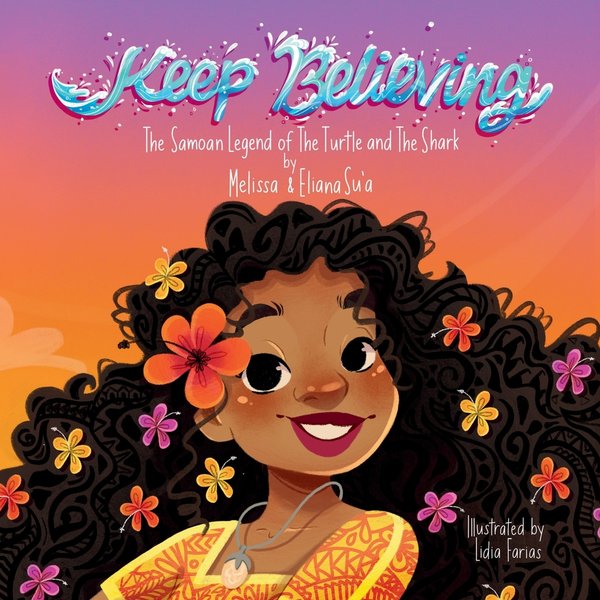
Keep Believing: The Samoan Legend of the Turtle and the Shark
Eliana S. Suʻa and Melissa L. Suʻa
Samoa & American Samoa Contemporary Fiction
In the seaside village of Vaitogi, American Samoa, Meliana is desperate to help her sick grandfather. When she learns about the legendary turtle and shark said to appear in the waters below the village, she begins to wonder whether the ancient story might hold the answer she's searching for.
Course connections: Samoan legends and folklore
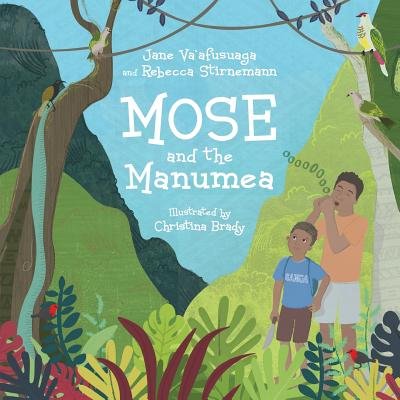
Mose and the Manumea
Jane Vaʻafusuaga and Rebecca Stirnemann
Samoa & American Samoa Contemporary Fiction
When Mose hears on the radio that Samoa's rare manumea bird may be disappearing forever, he and his cousin Niko set off to find one. Their search takes them deep into the forest, where they encounter other fascinating creatures—but spotting a bird so elusive that even scientists struggle to find it is another challenge entirely.
Course connections: Samoa's native wildlife and conservation
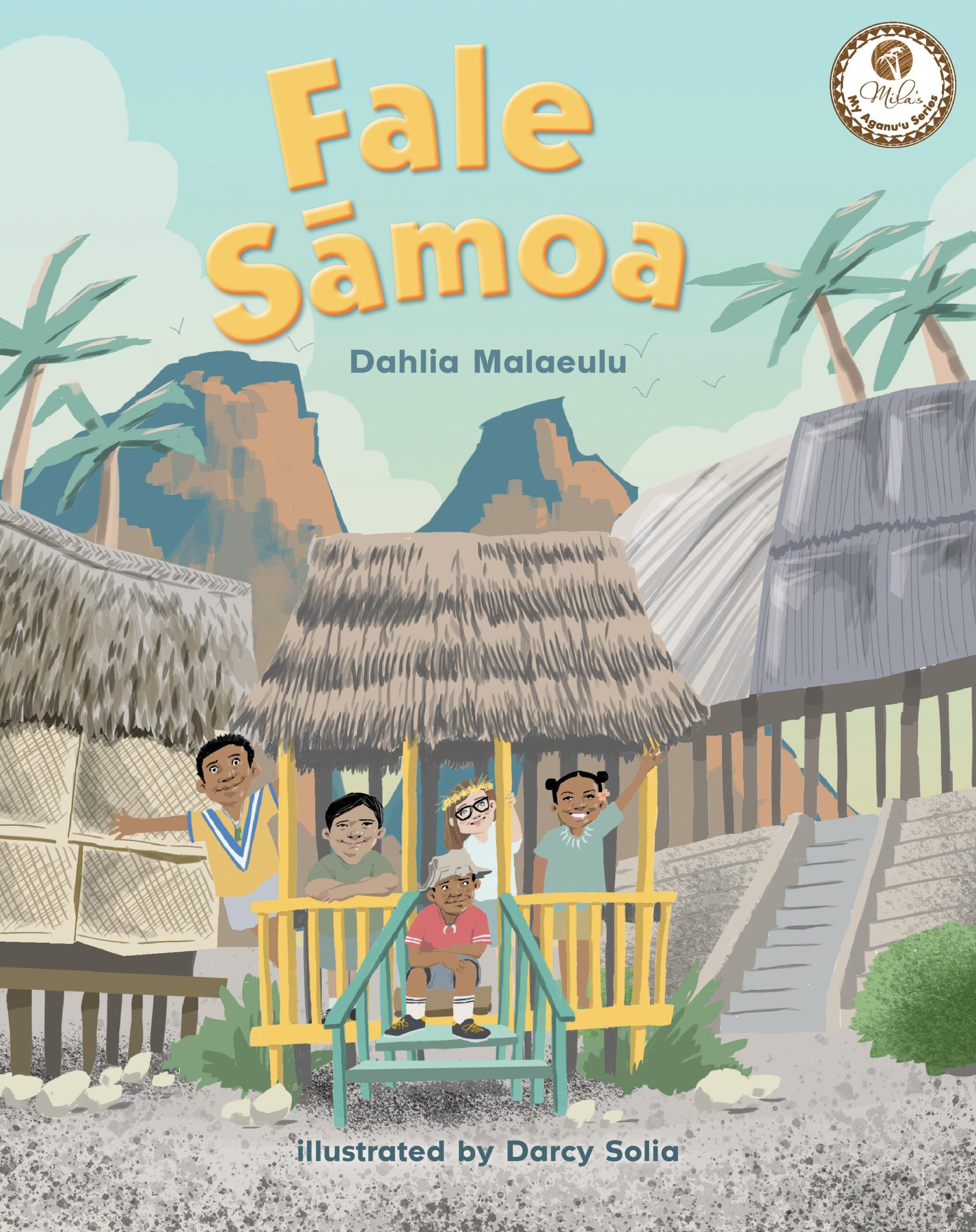
Fale Sāmoa
Dahlia Malaeulu
Samoa & American Samoa Fantasy
Tomasi and his friends are whisked away on a magical adventure through Samoa, where houses aren't quite like the ones they're used to. They discover enormous roofs held up by wooden posts, buildings with no walls, and special gathering places big enough for an entire community, with a new surprise waiting at every stop.
Course connections: Traditional Samoan architecture
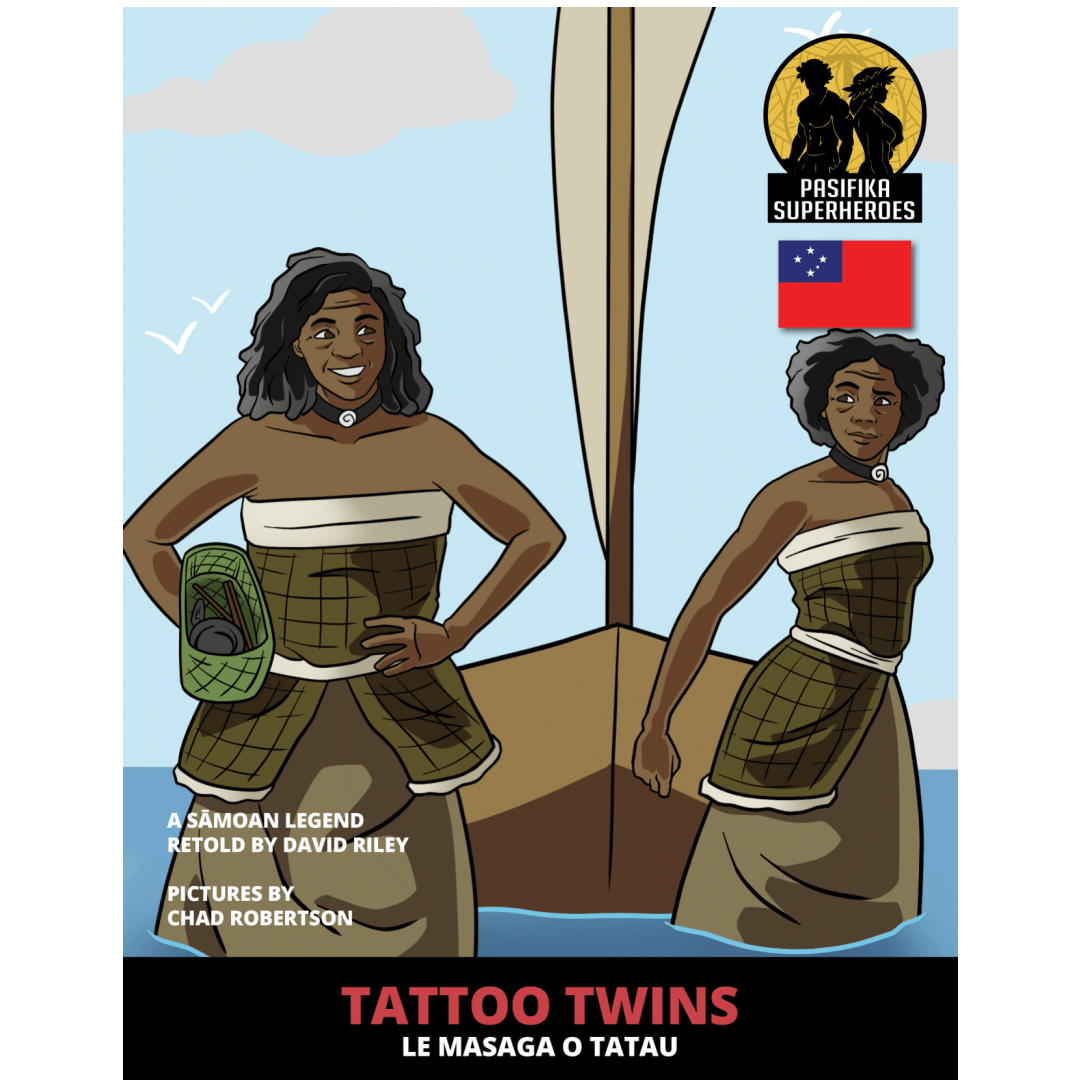
Tattoo Twins
David Riley
Samoa & American Samoa Folklore
Two sisters swim all the way from Fiji to Samoa, carrying the secrets of tatau, the traditional art of tattooing. As they cross the ocean, they repeat a song explaining who should receive the sacred designs, but a distraction causes them to reverse its words—changing the course of Samoan tattooing forever.
Course connections: Traditional Samoan tattooing and Polynesian cultural connections
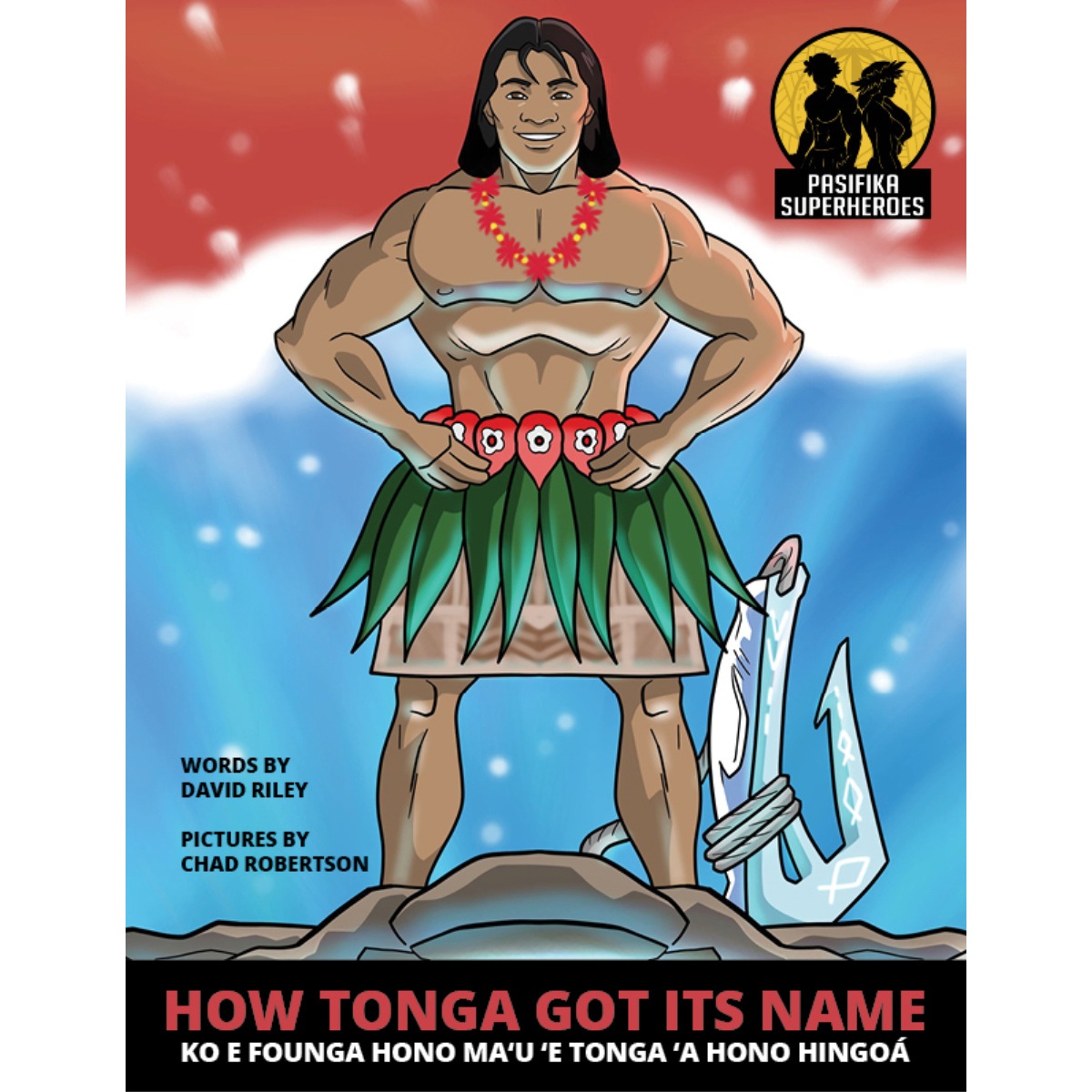
How Tonga Got Its Name
David Riley
Tonga Folklore
When the legendary hero Māui casts his fishing line into the Pacific Ocean, his hook catches on something impossibly heavy. He pulls with all his strength, expecting an enormous fish, but what emerges from the water is something far more astonishing—something that will change the map of the Pacific forever.
Course connections: Tongan mythology and folklore
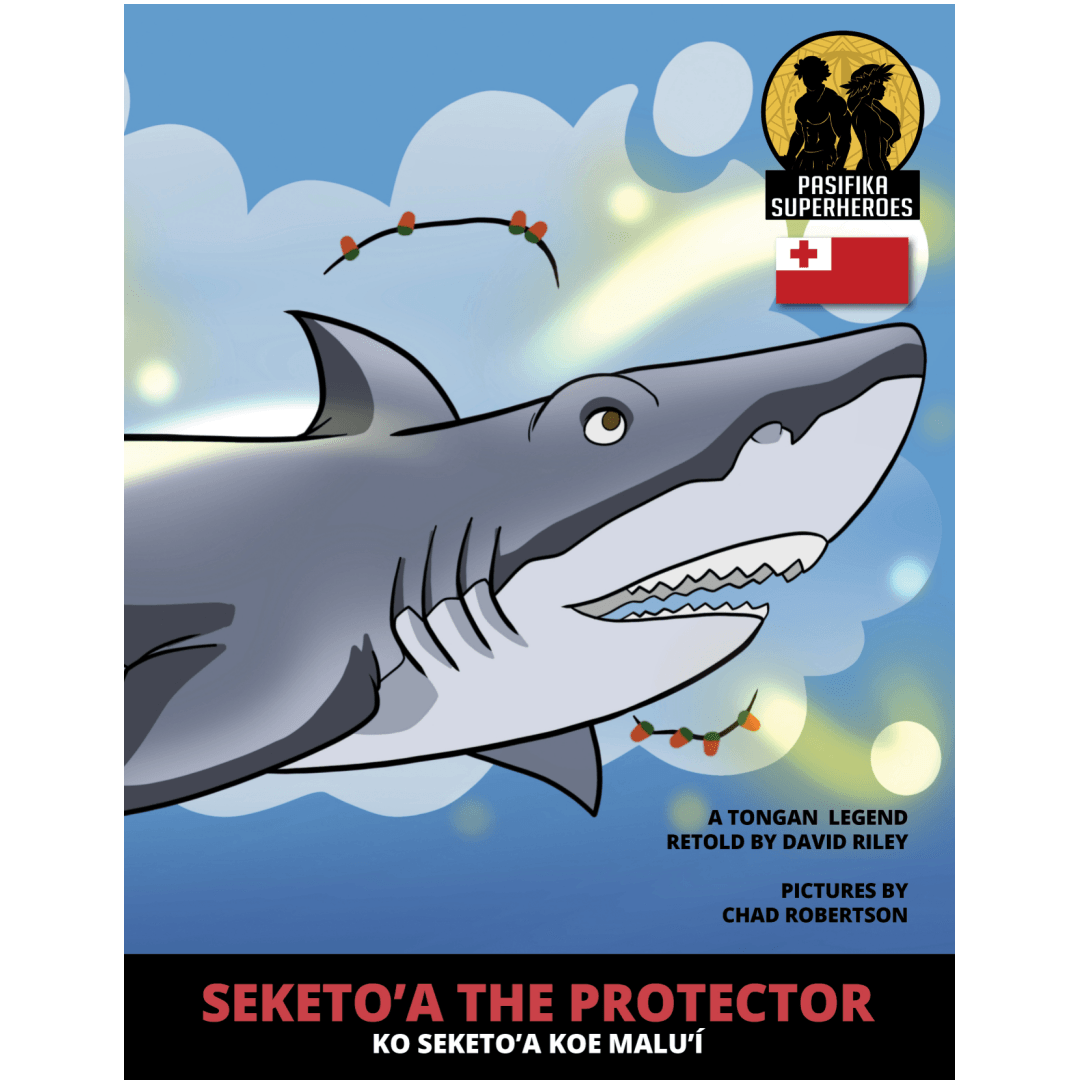
Seketoʻa the Protector
David Riley
Tonga Folklore
Deep in the waters around Tonga lives Seketoʻa, a powerful shark who protects people at sea. But when someone close to him becomes jealous, the mighty guardian faces a threat that even his supernatural strength may not be able to overcome.
Course connections: Tongan mythology and folklore
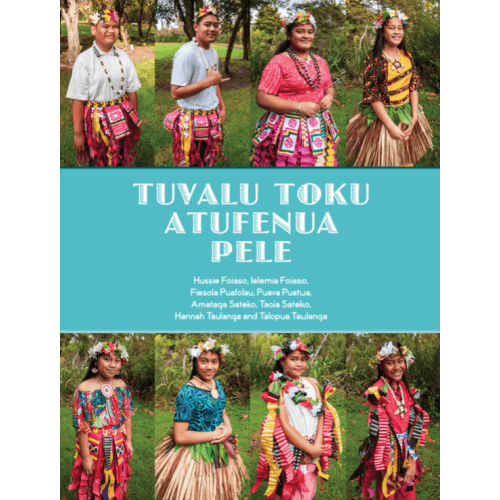
Tuvalu Toku Atufenua Pele
Eight Young Tuvaluan Contributors, with David Riley
Tuvalu Geography & Culture
How do you collect sweet sap from a coconut tree, weave a traditional mat, or play te ano? Eight young Tuvaluans share stories of their island heritage, from making flower garlands and dancing the fatele to remembering family traditions and celebrating Tuvalu's Olympic athletes.
Course connections: Tuvaluan cultural traditions and daily life
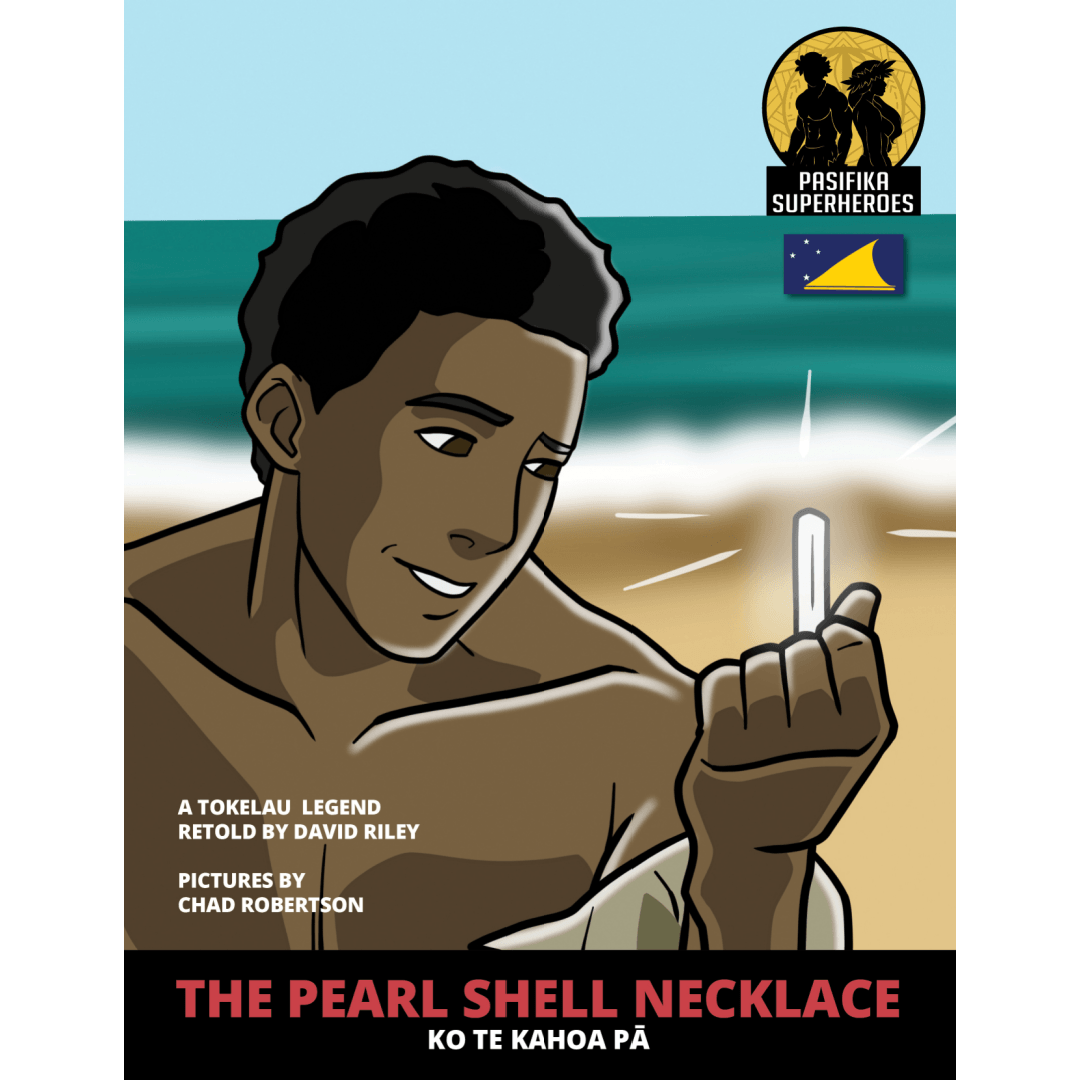
The Pearl Shell Necklace
David Riley, illustrated by Chad Robertson
Tokelau Folklore
Kalokalo-o-te-la loves Hina so much that he gives up everything he has for her. This bilingual retelling of a Tokelauan legend, in English and Tokelauan, is a story of love and self-sacrifice.
Course connections: Tokelauan mythology and folklore
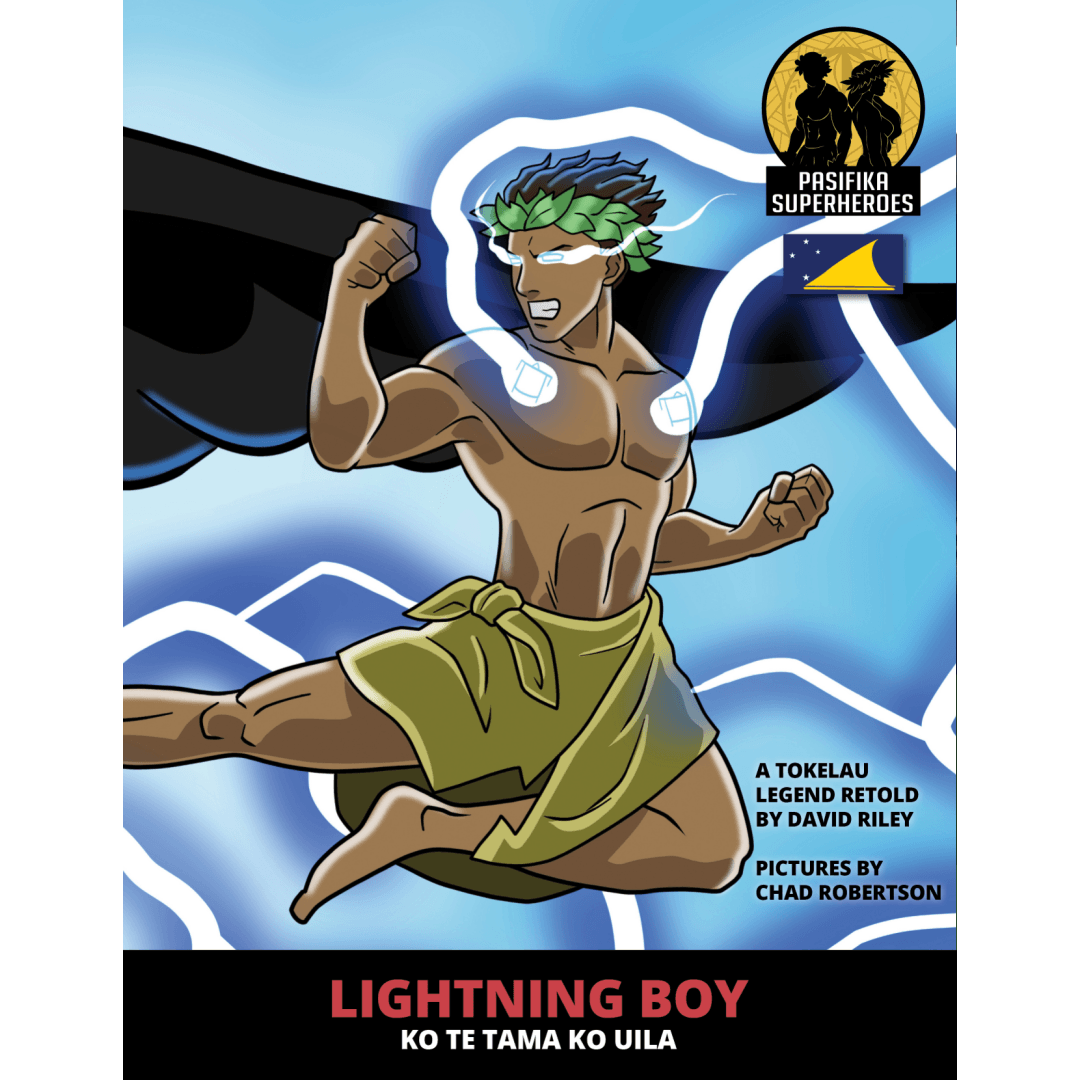
Lightning Boy
David Riley, illustrated by Chad Robertson
Tokelau Folklore
Others might not expect Uila, a boy, to solve a problem, but when danger comes to his family, he unexpectedly helps resolve it. This bilingual retelling of a Tokelauan legend, in English and Tokelauan, is a story about an unlikely hero.
Course connections: Tokelauan mythology and folklore
Darcy Solia
Tokelau Folklore
While Hina waits in a canoe above, Tokalalaga dives beneath the ocean to retrieve a fish trap. This traditional Tokelauan tale follows an adventure in the waters surrounding the islands, where even an ordinary fishing trip can become part of a legend.
Course connections: Tokelauan folklore and traditional fishing
Kelihiano Kalolo
Tokelau Folklore
Tinilau and Hina are two figures from Tokelau's traditional legends whose stories are connected to the ocean and the islands of Polynesia. This illustrated retelling introduces the legendary pair through a tale preserved in Tokelauan storytelling.
Course connections: Tokelauan mythology and folklore
Matiti School Students
Tokelau Poetry
Which fish is hiding behind each poem? Children from Tokelau's Matiti School describe the fish living in their island waters without revealing their names, using clues about their appearance and habits. Readers must study the poems and illustrations to solve the underwater riddles before checking the answers at the back of the book.
Course connections: Tokelau's marine wildlife
Recommended for grades 3–8. Chapter books, collections, and nonfiction for upper-elementary and middle-school readers.

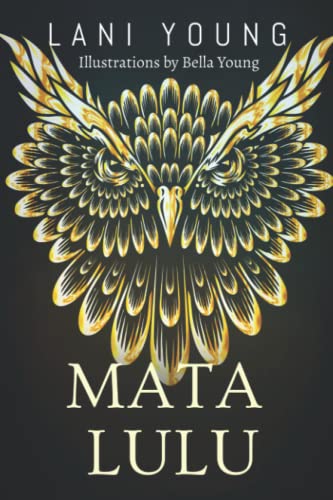
Mata Lulu: Stories from Samoa for Children
Lani Wendt Young
Samoa & American Samoa Folklore
Owls, guardian spirits, and ancient Samoan legends come to life in ten stories that move between the mysterious, the frightening, and the funny. Drawing on traditional storytelling, childhood memories, and contemporary Samoa, the collection blends supernatural encounters with stories of family and everyday island life.
Course connections: Samoan supernatural beliefs and oral storytelling traditions
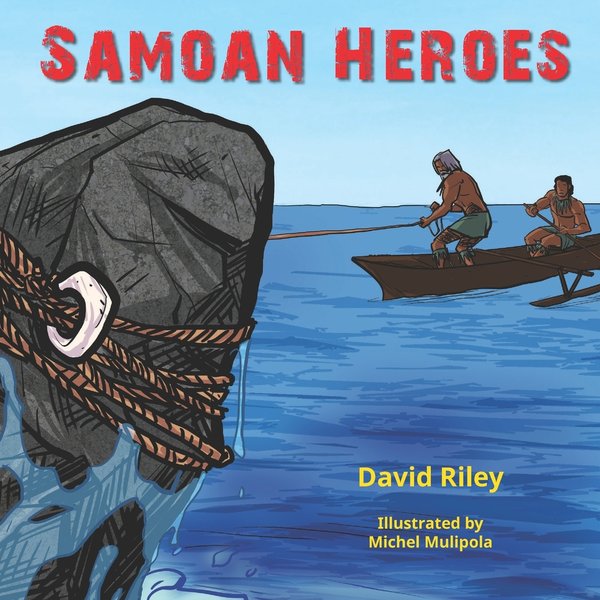
Samoan Heroes
David Riley, illustrated by Michel Mulipola
Samoa & American Samoa Biography
What do a warrior queen, an independence leader, and Dwayne “The Rock” Johnson have in common? They're all part of Samoa's remarkable history, brought together in an illustrated collection that ranges from legendary figures like Sina and Tigilau to Queen Salamāsina, Tupua Tamasese Lealofi III, and modern Samoan achievers.
Course connections: Samoa's traditional leadership, independence movement, and influential Samoans
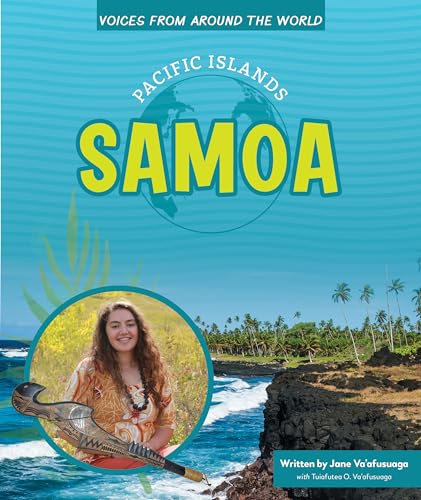
Samoa (Voices from Around the World)
Jane Vaʻafusuaga
Samoa & American Samoa Geography & Culture
How did Samoa's islands come to be, and who were the first people to settle them? Beginning with a traditional origin story, this illustrated introduction traces Samoa from its earliest inhabitants to the present day, exploring the language, customs, and daily experiences of the people who call the islands home.
Course connections: Samoa's early settlement, traditional tattooing, and independence from New Zealand
The Easter Egg Solution
Irene Webley
Tonga Contemporary Fiction
Amelia, Mele, and their little brother Semisi are counting on chocolate Easter eggs from their father, who's working in New Zealand. When he tells them he can't send the promised treats, the children must figure out how to rescue their Easter celebration without him.
Course connections: Tongan family relationships and labor migration to New Zealand
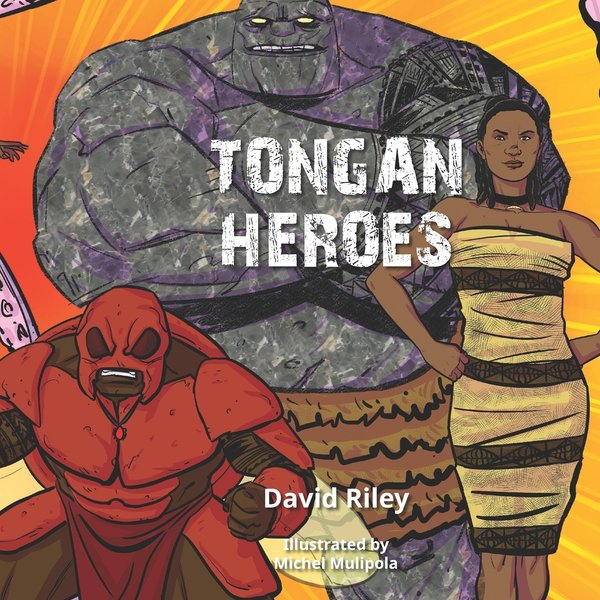
Tongan Heroes
David Riley, illustrated by Michel Mulipola
Tonga Biography
From Queen Sālote, who ruled Tonga for nearly fifty years, to rugby legend Jonah Lomu and poet Konai Helu Thaman, this illustrated collection introduces Tongans who made their mark on history, sports, and the arts. Alongside their stories are traditional legends about extraordinary figures such as Muni and Kavaoanu.
Course connections: Tonga's monarchy, traditional legends, and influential Tongans
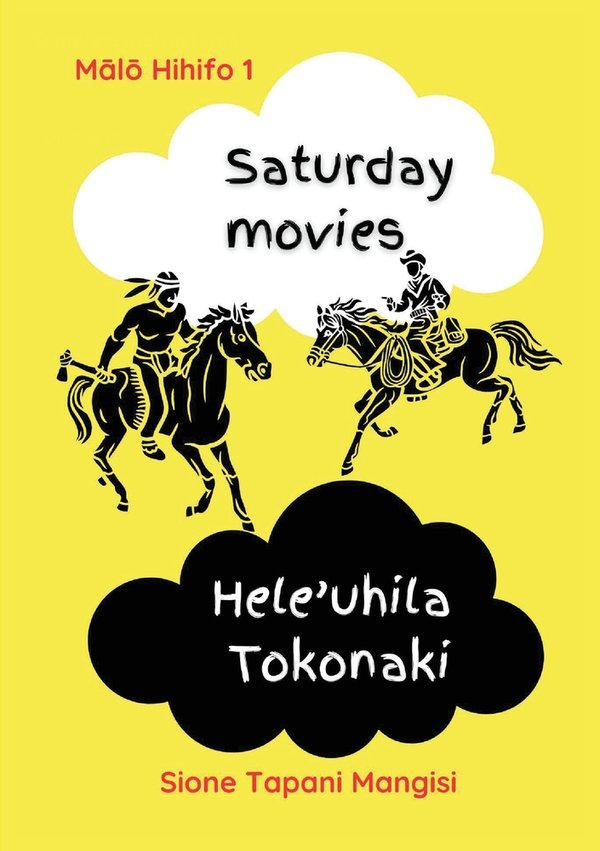
Saturday Movies / Heleʻuhila Tokonaki
Sione Tapani Mangisi
Tonga Memoir
Before electricity reached most Tongan villages, traveling movie operators hauled projectors, film reels, and generators into school buildings to put on Saturday-night shows. Local boys devised clever ways to sneak in without paying, while one teenager became a crowd favorite by offering his own entertaining interpretations of the films in Tongan.
Course connections: Tongan village life before widespread electricity and the history of local entertainment
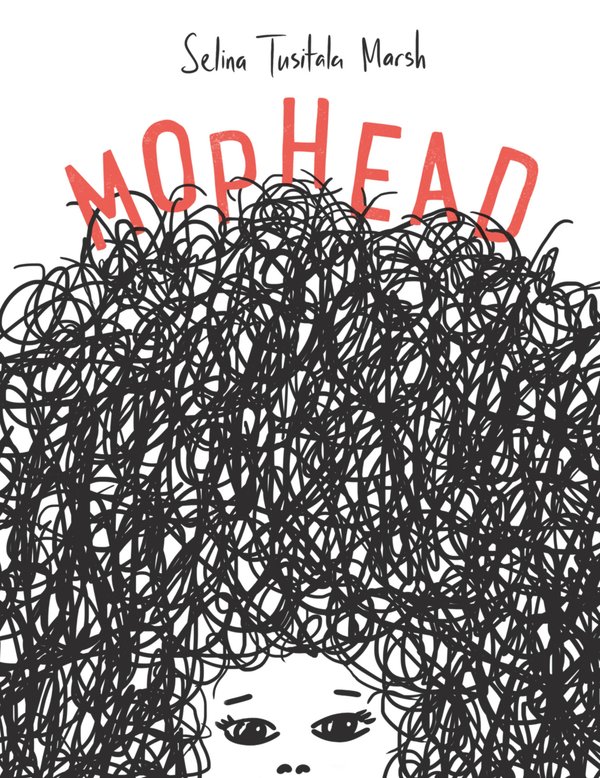
Mophead: How Your Difference Makes a Difference
Selina Tusitala Marsh
Tuvalu Samoa & American Samoa Memoir
At school, Selina's enormous, frizzy hair earns her the cruel nickname “Mophead,” and she tries everything to make herself look like everyone else. A visiting poet helps her discover the power of being different, setting her on a path from a teased Pasifika schoolgirl to New Zealand's Poet Laureate—complete with a ceremonial walking stick that has a wild mop of hair of its own.
Course connections: Samoan and Tuvaluan communities in New Zealand and Pacific Islander representation in literature
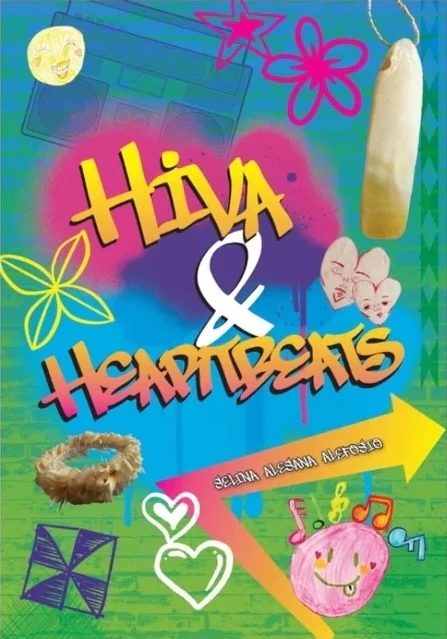
Hiva & Heartbeats
Selina Alesana Alefosio
Tokelau Contemporary Fiction
In 1990s New Zealand, Epi is navigating complicated crushes, family gatherings, and the dramas of growing up, with her diary and sister-cousin Lia alongside her. Through it all, traditional Tokelauan dance connects her to her family's heritage as she tries to balance her own dreams with the expectations of those around her.
Course connections: Traditional Tokelauan dance and Tokelauan communities in New Zealand
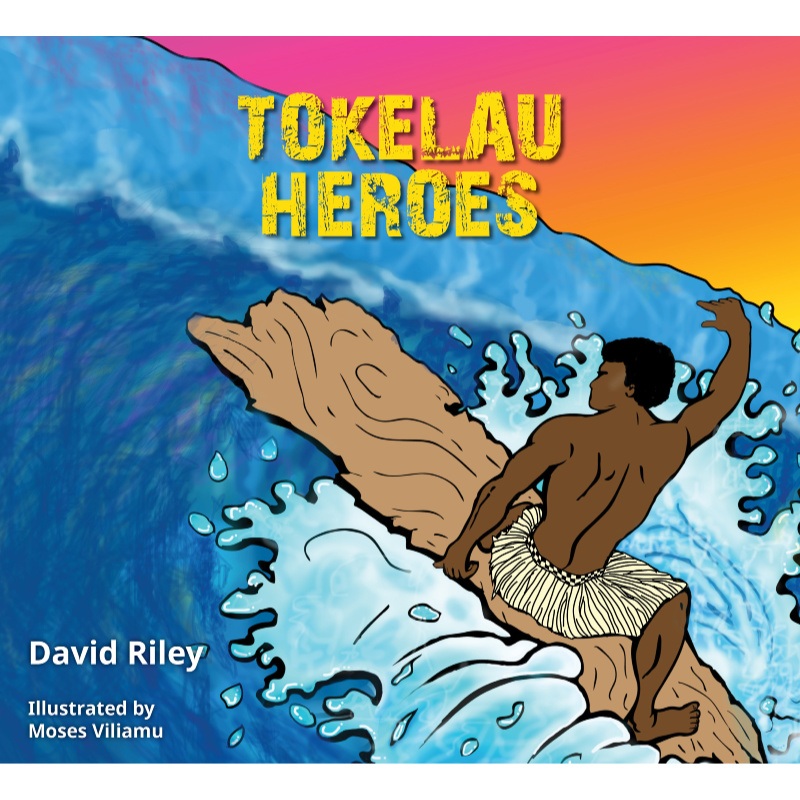
Tokelau Heroes
David Riley, illustrated by Mose Viliamu
Tokelau Biography
From Hina and the legendary Kalokalo-o-te-la to community leaders and contemporary musicians, this illustrated collection brings together remarkable figures connected to Tokelau's three coral atolls. Their stories span traditional mythology, island history, and modern achievements, including the music of Opetaia Foaʻi.
Course connections: Tokelauan traditional legends, community leadership, and influential Tokelauans
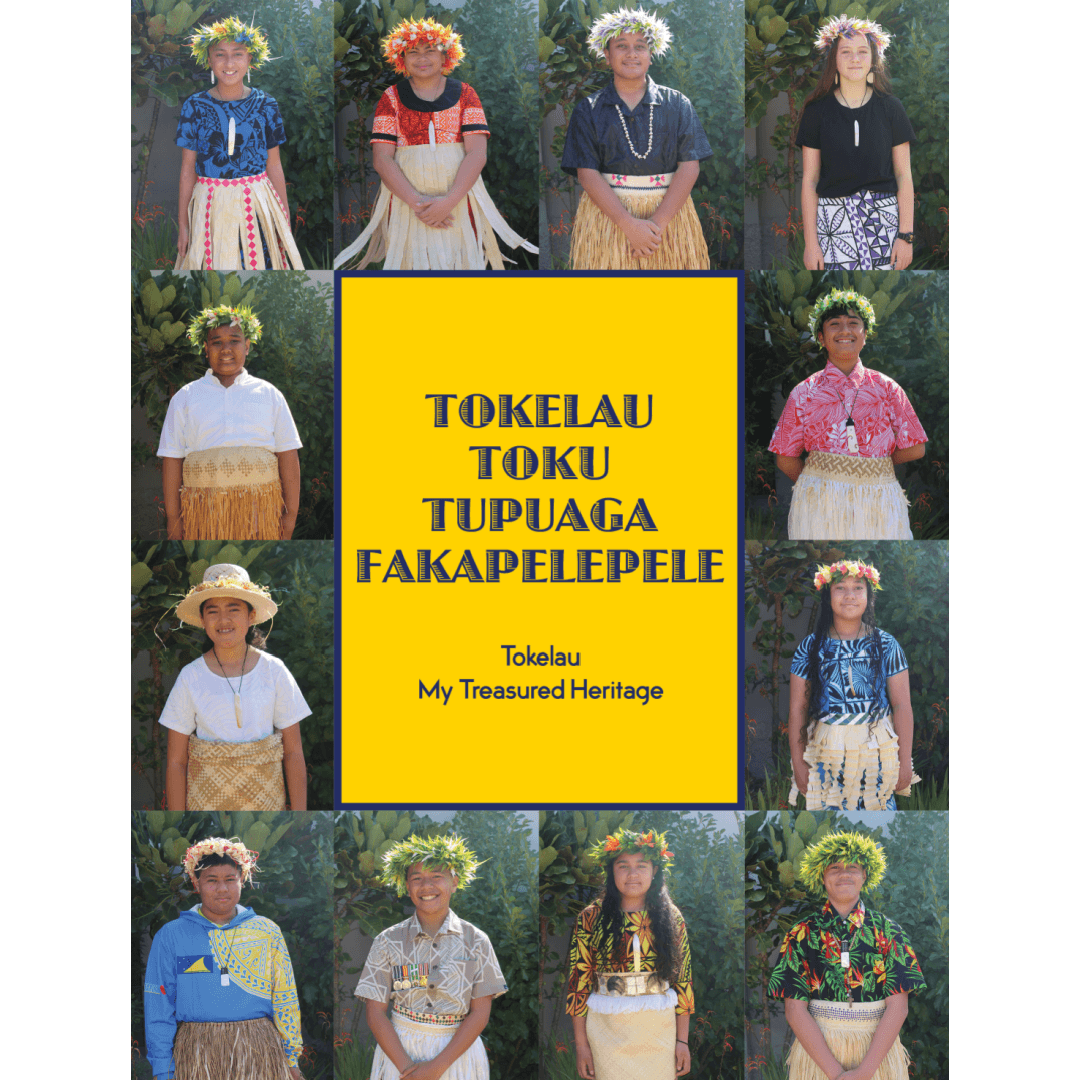
Tokelau Toku Tupuaga Fakapelepele
Twelve Young Tokelauan Contributors, with David Riley
Tokelau Geography & Culture
Twelve young Tokelauans share stories of what they treasure about their heritage, from a beloved ancestor and a trip to Tokelau to making panikeke palu ota with Nana and their love of their language, dance, and culture.
Course connections: Tokelauan cultural heritage, language, and daily life

Recommended for grades 8–9 and up. More demanding in length, language, structure, subject matter, or required background knowledge.

Coming Soon

Atlases, histories, and overviews for looking things up and going deeper. Use the country tag on each card to see which place it covers.

Coming Soon

Websites and collections for hard-to-find stories, language, and culture from these islands. Some are in French or a Pacific language, and a few are catalog records rather than free readings, so check the tags before you click.

Samoa & American Samoa Mythology English & Samoan
Stories and illustrations from American Samoa's bilingual education program, including creation stories, Māui, Sina and Tigilau, Nafanua, and the Turtle and the Shark.
Best use: Picture-book read-alouds, independent mythology reading, and comparing versions of a legend in Grade 9. Some stories are for more mature readers, so choose individually.
Samoa & American Samoa Oral history Audio
Digital preservation of Samoan storytelling, including historical Samoan-language recordings and translations.
Best use: Listening to oral traditions and exploring how storytelling differs from written literature.
Samoa & American Samoa Books
Publisher of Samoan Heroes, bilingual legend books, and books written by Samoan children, with previews and some digital editions.
Best use: Finding culturally specific books to fill Picture Book and Middle Grade gaps.
Tuvalu Oral history Tuvaluan
Traditional stories and historical accounts from Nanumea, preserved from recordings of elders.
Best use: Indigenous oral history and island-specific mythology. English availability varies by entry.
Tuvalu Free PDF English & Tuvaluan
Regional environmental education materials, including The Children Take Action! A Climate Change Story.
Best use: Early-grade reading on climate change and caring for the environment.
Community-hosted books including The Legend of Tokalalaga, Tinilau and Hina, Do You Know Me?, and Fagatua Tokelau. Several can be read online page by page with audio.
Best use: The easiest place to start for Tokelau.
Tokelau Art English & Tokelauan
Digital book on Pacific patterns with English and Tokelauan learning materials.
Best use: Picture-book reading paired with an art activity.
Tokelau Early reader English & Tokelauan
Short Tokelauan–English story about contemporary life, with digital educational materials.
Best use: Younger readers and comparing the two languages.
Catalog including Tokelau Heroes, Tokelau Toku Tupuaga Fakapelepele, The Pearl Shell Necklace, and Lightning Boy.
Best use: Longer, more varied books to go with the free early readers.
Official tourism pages on traditional culture and stories, including creation traditions and local legends.
Best use: Island-specific mythology and cultural background. Expect to translate from French.
Wallis and Futuna Teacher resource French
Teaching materials and references to traditional Wallisian and Futunan stories, including La légende de Mohukele and La Tortue au dos moussu.
Best use: Finding stories prepared for children in the islands.

A note for parents

Grade recommendations are based on reading level, complexity, and intended audience. Because every student and family is different, please review the book descriptions and content notes, and preview titles as needed, to determine whether each selection is a good fit for your student and your family's values. Content notes identify potentially sensitive material but may not cover every concern.

Photo credits

  1. “Atafu” by NASA Johnson Space Center (ISS014-E-19882), via Wikimedia Commons. Public domain.
  2. “Eel City” (Vailulu’u 2005 Exploration), image courtesy of NOAA Ocean Exploration, via NOAA Ocean Exploration. Public domain (U.S. government work). Resized.
  3. Big Momma and surrounding coral reefs, photographed by the XL Catlin Seaview Survey, via NOAA National Marine Sanctuary of American Samoa. Cropped.
  4. “To Sua Ocean Trench - Lotofaga village - Samoa” by Neil, via Wikimedia Commons, licensed under CC BY 2.0. Resized.